
The engineering challenge behind lighter, smarter plastic packaging
When you pick up a plastic container, the engineering behind it is easy to overlook, but every gram can represent a complicated technical decision. Packaging must protect its contents, survive filling and transportation, seal reliably and remain practical for consumers, so reducing material use requires far more than simply making a wall thinner. So, engineers must understand how polymers behave under pressure, heat, impact and repeated handling, so designers must consider how a component will perform at high production volumes.
The challenge has become more demanding as the EU's Packaging and Packaging Waste Regulation begins to apply generally on August 12, 2026, with requirements covering packaging design, composition, recyclability and waste management. The regulation also sets recycled-content targets for plastic packaging, with several minimum levels applying from 2030. These rules create new technical demands for manufacturers, as material reduction has to work alongside regulatory compliance and dependable performance.
If you look closely at a modern cap, jar or lid, you are seeing a technical balancing act where material efficiency has to coexist with strength, safety and usability. EU residents generated an average of 35.3 kg of plastic packaging waste per person in 2023, so only 14.8 kg per person was recycled, so even small design improvements can matter at scale. Ultimately, a minor change in geometry can affect pressure resistance or production performance, while the finished package still depends on polymer science, tooling and testing.
The precision behind smaller components
Today, Modulpac offers a useful example of how this engineering challenge works at the component level, as the Swedish manufacturer develops and produces closures, jars and lids for pharmaceutical, food, cosmetic and chemical applications. The company manufactures more than 150 million pieces annually, with its product range including standardized packaging alongside custom injection-molded components designed around specific customer requirements.
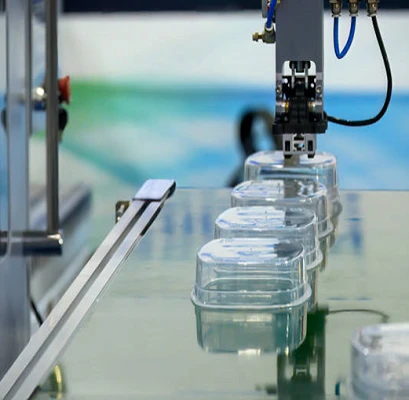
Its portfolio includes screw caps, child-resistant closures and tethered closures that remain attached to a container after opening, so the design has to balance convenience, safety and mechanical performance. Production capabilities include ISO Class 8 cleanroom manufacturing for demanding applications, while automation and robotics support high-volume production. Each of these factors contributes to the wider challenge of creating packaging that performs consistently across demanding industrial conditions.
When you consider the scale involved, even a small reduction in the weight of one closure can become significant across millions of units, but that reduction only has value if the component continues to seal, withstand handling and perform consistently through the manufacturing process. A lighter component therefore requires careful control over design, materials and production, so the technical detail becomes significant precisely because the same small component can be manufactured millions of times.
Lightweighting is a structural problem
The most obvious route to lighter packaging involves using less material, but the engineering calculation becomes complex as soon as performance requirements enter the discussion. A cap or jar must withstand compression, impact, twisting and temperature changes, so its geometry must also work with filling lines, sealing equipment and existing container formats. Every reduction has to be assessed against the forces the component will face.
Engineers can redistribute material through ribs, threads, support structures and sealing surfaces, so a component retains the necessary strength without carrying unnecessary mass. Injection molding adds further constraints, as the plastic must flow through the tool, cool evenly and release cleanly after forming. A design that looks efficient on a computer screen can still produce defects if material thickness changes too sharply or cooling creates distortion.
For you as a consumer, the finished packaging can appear simple, but the development process involves structural analysis, polymer data, tooling expertise and production trials. Lightweighting succeeds when each section of the component performs a defined function, while unnecessary material gradually disappears from the design. Ultimately, the best results come from understanding precisely how geometry and material interact throughout the product's life.
Tethered closures turn regulation into engineering
Tethered closures show how a regulatory objective can become a detailed mechanical design problem. EU rules require certain single-use beverage containers to retain their caps after opening, so the connection between the cap and container must remain secure during use. At the same time, consumers still need to open, pour and close the container with minimal inconvenience.
Engineers must balance attachment strength, flexibility, sealing performance and compatibility with the relevant bottle neck, but production equipment must handle the design reliably at scale. Modulpac's tethered closure range illustrates this approach through designs that remain connected to the container after opening, with options that use different sealing arrangements for specific applications. The result depends on several small engineering decisions working together.
If you have ever opened a modern tethered cap, you have probably noticed that the attached design changes the movement of the closure, so small details in the hinge or connection can influence the entire user experience. The component may look familiar, but its performance depends on precise geometry, material behavior and controlled manufacturing. Overall, a simple change in use can consequently demand considerable technical development.
The future depends on measurable performance
The next phase of packaging engineering will demand more precise measurements, as a lighter component alone does not tell you enough about its overall performance. Designers and manufacturers increasingly need to assess material mass, recycled content, production efficiency, durability and recyclability together, so a packaging improvement can be judged across its full service life. Each metric provides a different part of the technical picture.
Manufacturing infrastructure matters too, as automation, robotics and controlled production environments can improve consistency while reducing waste from defective components. Modulpac's investment in cleanroom production, automated systems and energy-efficiency measures reflects this wider connection between product design and manufacturing capability. Packaging innovation depends on the interaction between the object being designed and the system producing it.
For you, the final result might simply be a cap that feels lighter or a jar that uses less material, but the technical achievement lies in preserving performance through that reduction. As packaging rules become more demanding, the strongest solutions will combine intelligent geometry, carefully selected materials and reliable production systems, so the future of plastic packaging will be measured in precise engineering decisions as much as in the amount of material used.
 Media Pack Download
 Newsletters
 Industrial Events



Author Bio: