Understanding the Life Cycle Analysis of Plastic Products
Introduction: Why Life Cycle Thinking Matters in the Plastics Industry
The plastics cannot be disregarded in various industrial fields such as packaging, automobile, healthcare, electronics, construction, and consumer products. They are the building blocks of contemporary manufacturing due to their durability, lightweight nature, economical nature, and versatility. Nevertheless, increasing environmental scrutiny has heightened the demand of quantitative, information-based sustainability practices. To the manufacturers, converters, brand owners and procurement teams, the life cycle analysis of plastics is no longer a choice, but a strategic necessity.
The Life Cycle Analysis (LCA) offers a stepwise approach to assessing the environmental footprint of plastic products where the raw materials are mined, up to the treatment of the end-of-life products. LCA facilitates compliance reporting, carbon accounting, eco-design strategies, supplier benchmarking as well as ESG commitments in B2B industries. It makes sustainability a marketing statement a performance measure.
This article will discuss the plastic product life cycle, process of plastic life cycle assessment as well as how industries can use LCA to minimize the carbon footprint of plastic products without affecting performance.
What Is Life Cycle Analysis of Plastics?
The life cycle analysis of plastics is a methodology of the assessment of environmental effects of a plastic product during its entire lifecycle. This covers the process of extraction of raw materials, the production of the polymer, manufacturing, transportation, use and the disposal processes at the end of the life like recycling, combustion or landfills.
LCA in the sector of industry is performed in the line of the international standards and norms like ISO 14040 and ISO 14044. These standards are able to guarantee transparency, comparability and consistency in the methodology across sectors.
In its essence, plastic life cycle assessment measures such parameters as the energy use, greenhouse gas emissions, water use, waste, and resource depletion. This is aimed at mapping environmental hot spots and steer improvement pathways throughout the value chain.
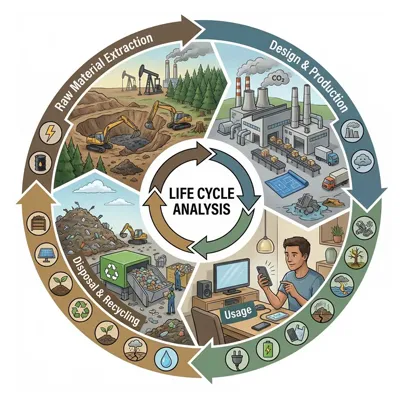
The Plastic Product Life Cycle: From Cradle to Grave
To have a cradle-to-grave view of the plastic product life cycle, one should have a cradle to grave perspective. All of them have different effects on the environment of plastic products.
Raw Material Extraction and Feedstock Processing
The traditional plastics are made with the use of fossil fuels, crude oil or natural gas. Monomers such as ethylene and propylene are formed through extraction, refining and cracking process. These initial steps are energetic and make a substantial contribution to the carbon footprint of the plastic products.
Over the past few years alternative inputs have been introduced in the form of bio-based feedstocks and chemically recycled polymers. Their performance in life cycle however is based on their agricultural practices, change in land use and processing efficiency.
Polymer Production
Monomers are transformed into polyethylene (PE), polypropylene (PP), PET and polyvinyl resin and polymerize. This phase is very energy consuming and produces process emissions. Here plastic manufacturing is starting to build up on the environment, particularly in areas that use electricity generated by fossil fuels.
In many studies of industrial LCA, it usually appears that the resin manufacturing is among the biggest sources of greenhouse gas emissions in the life cycle of plastic products.
Product Manufacturing and Conversion
Extraction of resin in the form of pellets into the completed products that are achieved through injection molding, extrusion, blow molding, or thermoforming, is an additional layer to the environment. The use of energy in processing, scrap rate, cooling, and auxiliary equipments affect the total emissions.
An environmental impact of plastic-manufacturing at this point can be dramatically decreased with process optimization, energy-efficient equipment, and scrap recovery in the form of closed loop.
Distribution and Logistics
Depending on supply chain design, distance covered by shipping, and transportation mode, transportation contributes to emissions. Lightweight plastics can be very beneficial to use over heavier materials, such as glass or metal, reducing carbon emissions in logistics-related processes.
In the case of B2B companies with global suppliers, the analysis of transportation represents a crucial part of life cycle analysis of plastic products of the production to recycling.
Use Phase
Plastics can be used in numerous applications to facilitate downstream environmental advantages. Lightweighting in automobiles leads to less fuel. High medical plastics enhance the mechanism of sterilization. Insulation materials with high performances greatly lower the energy requirement of the building.
Hence, the complete and accurate plastic life cycle evaluation should be based on functional performance and not on material weight.
End-of-Life Management
The last process involves mechanical recycling, chemical recycling, energy recovery through incineration and landfill disposal. The end-of-life treatment has a great impact on the total carbon footprint of plastic products.
Recycling can compensate the effects of production of virgin material but the rates of contamination, availability of infrastructure and the systems used to collect the wastes affect the real world results.
Life Cycle Analysis of Plastic Packaging
Packaging is one of the most examined uses of plastics in the world. The plastic packaging life cycle analysis tends to draw a comparison between plastic and other alternatives like paper, aluminum, or glass.
Although plastics have been criticized because of the visibility of waste, LCA studies have often demonstrated that plastic packaging media can potentially offer a lower emission of greenhouse gases than other heavier materials due to lower transportation weight and material use.
The most common factors that are usually investigated by an environmental life cycle assessment of plastic packaging material are the barrier performance, food preservation advantages, spoilage reduction and the recyclability. As an illustration, multilayer films can make recycling more difficult, yet increase shelf life and minimise food waste which in turn has a large carbon footprint.
In case of B2B packaging manufacturers, LCA is a tool-based decision support in the choice of material, optimization of design, and adherence to the extended producer responsibility regulations.
LCA Study of Plastic Products in Industrial Applications
Plastics are commonly used as components in complex assemblies in industrial markets like automotive, aerospace, construction and electronics. With a plastics study of LCA applied to using the products in industries, the material is not viewed in isolation but in terms of its contribution to the overall efficiency of the system.
As an example, engineered plastics can be used in place of metal, thus decreasing the weight of a vehicle thus lowering the lifetime emissions. Plastic insulation materials can help greatly lower the energy used in the operation in the decades in construction.
The request of Environmental Product Declarations (EPDs) as standardized LCA-based statements of environmental performance by industrial buyers is growing. Those suppliers who invest in high capabilities of plastic life cycle assessment have an upper hand in the tender process.
Key Metrics in Plastic Life Cycle Assessment
Although LCA is a range of environmental indicators, several measures are especially applicable to the stakeholders of B2B.
The carbon dioxide equivalents of greenhouse gas emissions are used and form the foundation of the calculation of carbon footprint of plastic products. Renewable and non-renewable energy sources show the intensity of resources in terms of energy demand. The water consumption presents the possibility of water strains in water-deficient areas. Measures of acidification and eutrophication determine effects on ecology.
These metrics enable the decision-makers to objectively compare materials instead of using perception or narratives of the people.
Definition: Core LCA Terms
Cradle-to-Grave is the evaluation of the effects between extraction of the raw materials and disposal.
Cradle-to-Gate checks up to the production phase of the product prior to factory exit.
Functional Unit identifies the quantifiable basis of performance to compare, e.g. 1,000 units of packaging, which secures 1 ton of products.
System Boundary is what defines the processes that have to be included or not in the study.
These terms are very critical in the interpretation of LCA reports.
Strategic Value of LCA for B2B Organizations
Plastic life cycle analysis provides quantifiable non-environmental business values.
To start with, it facilitates regulatory adherence. There are now many areas in need of carbon disclosure, packaging impact reporting or sustainability labeling. Second, LCA spurs eco-design by determining the most significant stages in the life cycle of the plastic product. Third, it advances the transparency of the supply chain and improves relations with the clients that have sustainability as their priority.
In addition, carbon neutrality has corporate ESG reporting, which supports organizations in achieving science-based targets and goals to achieve carbon neutrality.
Reducing the Environmental Impact of Plastic Products
When understanding the environmental hotspots, the organizations can deploy the strategies of improving the value chain.
By adopting renewable energy in the production and conversion of polymers, the emission is less. The use of more recycled material reduces the need to use virgin feedstocks. The design-for-recycling principles enhance the recovery rates of end-of-life. Optimization of processes minimizes the scrap and energy wastage.
Lightweighting strategies in packaging reduce the consumption of raw materials and do not affect performance. Industrial recycling systems are closed loop systems that help in curbing landfill dependency.
Through the learning of the life cycle analysis of plastic products in the production to recycling process, firms can shift their level of reactivity to sustainability leadership.
Frequently Asked Questions: Industry Perspective
Is plastic always worse than alternative materials?
Not necessarily. The environmental life cycle analysis of plastic packaging containers usually shows that the emissions are less because of less weight and diminished effects of transportation.
Does recycling eliminate the carbon footprint of plastic products?
Recycling (compared with virgin production) generates a much lower amount of emissions but collection, sorting and reprocessing of products requires energy.
LCA measures the net value.
Why do LCA results differ between studies?
The disparity in boundaries of systems, functional units, energy combinations, and geographical assumptions affect outcomes. It is important to be transparent in the methodology to be able to compare.
Emerging Trends in Plastic Life Cycle Assessment
LCA practices are being changed through digitalization. High-tech software platforms combine real-time production data, which allows monitoring the environmental performance dynamically. The concept of blockchain technologies is a possible solution to enhance the traceability of materials throughout the life cycle of plastic products.
Chemical recycling is becoming a solution of complex wastes. There is a comparison of its real environmental benefits against mechanical recycling and virgin production under the LCA studies.
The other new trend is Scope 3 emissions accounting that involves businesses quantifying upstream and downstream up to purchased plastics and end-of-treatment.
Conclusion: Moving Toward Data-Driven Sustainability
Plastics will continue to be among the most important industrial innovations, they can however only be viable only on a long term basis as long as they are well managed on their lifecycle. The life cycle analysis of plastics is the scientific basis of informed decision-making that incorporates the balance between the performance, cost and environmental responsibility.
To manufacturers, converters, and industrial purchasers, it is imperative to have knowledge of the plastic product life cycle to lessen the effect of the plastic manufacturing on the environment and to have a smaller carbon footprint of the plastic products. Plastic life cycle assessment, be it utilized in the packaging, automotive or high performance industrial applications, can facilitate quantifiable advancements towards the objective of sustainability.
Today, when the environmental responsibility plays a role in determining procurement, regulatory procedures, investor trust, and so on, LCA is not merely an analytical tool, but a strategic asset. Life cycle thinking-based organizations in the areas of product development and supply chain management will not only curb environmental risks but will also open new vistas of innovation and competitive differentiation in the world plastics market and industry.
 Media Pack Download
 Newsletters
 Industrial Events