

Mainetti Group

About: Michelle Boon - Global Head of Flexible Packaging
Michelle Boon began her career with Mainetti Malaysia in 1997 as part of the logistics team. She later advanced to the role of Commercial Manager, where she led the sales team across Southeast Asia. Following Mainetti Group?s expansion into Vietnam in 2004, Michelle relocated to Ho Chi Minh City and was appointed General Manager for Vietnam in 2008. Her leadership and expertise led to her promotion in 2012 as the Southeast Asia General Manager, overseeing both owned and licensee operations in the region. In 2019, Michelle further expanded her responsibilities by taking on the role of Global General Manager for Flexible Packaging. She holds a degree in Hospitality Management from Stamford College, Malaysia.
1. In light of the ASEAN Summit's focus on global plastic pollution, what are the primary environmental and economic impacts associated with plastic waste as reported by recent studies and global reports?
The impact of plastic waste on the environment and economy is significant. Indeed, by 2050, plastic production is projected to account for 10 to 13 percent of the remaining global carbon budget as permitted by the Paris climate agreement. This is particularly concerning as only nine percent of plastic waste is recycled worldwide, leading to the accumulation of debris and micro plastics leaking into the oceans. This waste is frequently ingested by endangered wildlife and exposes sensitive habitats such as coral reefs to toxic substances, affecting water quality and entering the food chain. This can impact human health, which creates significant economic burden on healthcare systems.
Furthermore, as the South and Southeast Asia region has a vast marine territory which it relies on, when fish stocks are reduced due to plastic contamination, significant economic losses are created as well as severe food security concerns. This economic strain is exacerbated by governments incurring significant costs on plastic waste clean-up. Indeed, the World-Wide Fund for Nature (WWF) found that the global lifetime cost of the plastic produced in 2019 alone is $3.7 trillion, a figure that is set to double in 2040. This drains budgets and resources that could be allocated to other essential services.
Overall, plastic production poses significant challenges for the planet, and as it continues, it's important for the packaging industry to contribute by investing in sustainable solutions to help reduce plastic pollution.
2. How do current statistics on plastic pollution, such as the 370,000 tonnes of imported plastic waste highlighted in the UN’s 2024 report, reflect the severity of the problem, and what trends are emerging in plastic waste generation and management?
Current statistics on plastic waste imports highlight the immense scale of the global plastic pollution problem, representing only a fraction of the total waste generated worldwide. We have witnessed, global plastic production increase from 2 million tonnes in 1950 to over 450 million tonnes today and if current trends persist, production could triple by 2060.
In terms of plastic waste management, the data shows significant room for improvement globally, as the United Nations Development Programme (UNDP) reports that 79 percent of plastic waste is landfilled and 12 percent is incinerated worldwide. It is therefore crucial that governments prioritise the widespread implementation of recycling infrastructures to properly deal with this waste, while also limiting the further production of virgin plastic, to prevent the global plastic crisis from worsening.
3. What barriers hinder the adoption of a circular economy in South and Southeast Asia, and how can multinational companies, governments, and local communities collaborate to overcome these challenges to combat plastic pollution?
Although consumers show interest in recycling, the inaccessible recycling infrastructure throughout South and Southeast Asia presents a significant barrier to adopting a circular economy. Indeed, a 2020 report by SEA Circular surveyed consumers from Indonesia, Malaysia, the Philippines, Thailand and Vietnam and found that 46 percent of respondents believe waste collection systems must be improved to reduce the region’s plastic waste, while 44 percent cited a lack of accessibility to recycling bins as their main reason for not recycling. These findings highlight the need for robust recycling infrastructure. To combat this issue, governments must implement national waste management systems that make recycling easy and accessible for the wider population.
Furthermore, limited educational resources on circularity pose challenges to the adoption of circular economic principles in Southeast Asia. For example, in 2022, the National Environment Agency found that 40 percent of materials in Singaporean recycling bins are unrecyclable due to contamination by non-recyclable materials such as food and liquid waste. This indicates a shift is required in consumer understanding and behaviour. Indeed, the SEA Circular report found that only 54 percent of consumers recycle while 33 percent consider the importance of sustainability when making purchases. The report also found that consumers are more likely to recycle if others around them do as well, suggesting that recycling must become more normalised throughout the region. To achieve this, governments must invest in educational programs to raise awareness of the circular economy.
4. How has the retail industry evolved its approach to sustainability and waste management in response to the push for greater recycling and circularity, and what core principles of circularity are essential for transforming recycling practices and reducing global waste?
According to the Ellen MacArthur Foundation – of which Mainetti, sustainable packaging producer, has been a member since 2021 – the circular economy is driven by three key principles. The first is to reduce waste and pollution by deviating from the current take-make-waste system which significantly contributes to global waste. The second principle is about keeping materials in circulation through two main cycles: the technical cycle, where products are reused, repaired, and recycled, and the biological cycle, where biodegradable materials are composted and returned to the earth. Through these cycles, we can uphold the final principle which focuses on the preservation of nature.
In response to recent regulatory pressures from Southeast Asian governments, the retail industry is adopting more sustainable practices, leading to reduced waste output in countries with a circular model. In 2002, Taiwan restricted the use of plastic bags to encourage the use of reusable alternatives. Consequently, Taiwan’s early restrictions on plastic bag use, introduced in 2002, have halved plastic bag consumption from 20 billion on 2002 to 9 billion on 2023. The nation has now become one of the world’s leading countries for recycling, reflected by its increased recycling rate which rose from 12 percent in 2001 to 58 percent in 2019.
The success of Taiwan’s ban illustrates the power of collaboration in the circular economy: governments must implement sustainability-focused policies, and the wider industry and public must fully support and engage with these initiatives.
5. What innovations in recycling technologies are currently emerging, and how might these advancements enhance the effectiveness of recycling programs and contribute to a more sustainable future?
A significant barrier to the circular economy in Southeast Asia is the limited development of recycling technologies. However, promising steps are being taken to address this issue. Malaysia - where landfills are predicted to reach capacity by 2050 due to increasing waste output – has initiated plans to establish six Waste-to-Energy plants nationwide by 2025. This is part of the government’s broader plan to achieve net zero by 2050 and prioritise environmental preservation, highlighting a positive shift towards sustainable solutions.
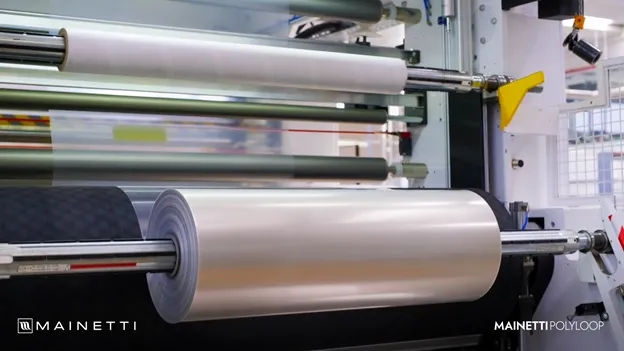
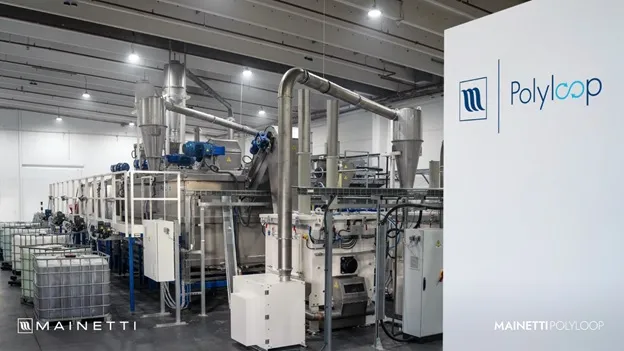
Likewise, it is important that businesses across the region focus on recycling technologies. Mainetti is supporting South Asia’s sustainability journey by expanding its recycling operations. In February 2024, Mainetti opened its new facility in Dhaka, Bangladesh, scaling our pioneering recycling process for clear LDPE film, Polyloop. The new facility has allowed Mainetti to save up to 45 percent of carbon emissions, equivalent to 876,000 kg CO2e.
To ensure the environmental progress generated by initiatives such as Polyloop continues, the packaging industry must prioritise the development of sustainable solutions and processes, allowing South and Southeast Asia to become more environmentally friendly regions.
6. How can the success of recycling initiatives be measured in terms of impact on plastic waste reduction and recycling rates, and what are some key metrics or outcomes to consider?
Globally we are on a mission to tackle the growing plastic pollution crisis and accelerate the deployment of widespread recycling initiatives. In 2022, all 193 UN Member States formally announced their commitment to this goal and to measure its success, nations must monitor their metrics.
In 2019, the Singaporean government introduced their Zero Waste Masterplan which aims to reduce daily landfill waste by 30 percent and achieve a 70 percent recycling rate by 2030. Similarly, the UN Environment Programme’s 2023 report, Turning off the Tap: How the World Can End Plastic Pollution and Create a Circular Economy, projects that global plastic pollution could be reduced by 80 percent by 2040 if governments and businesses implement significant policy and market changes.
By tracking key targets and predictions, governments and businesses can assess the impact of their recycling programs and identify areas for improvement through data-driven decisions. Through this approach, we are more likely to reach these targets and create a circular economy across the globe.
7. Looking ahead, what are the long-term goals and visions for achieving sustainability in the context of plastic pollution, and how can these goals be aligned with global environmental targets?
In 2022, the Organisation for Economic Co-operation and Development (OECD) found that every year, the world produces 430 million metric tonnes of plastic where the majority of this comprises short-lived products such plastic cutlery, adding to the world’s waste. The UNDP reports that in 2021, single-use plastic amassed 139 million metric tonnes, and if the world continues ‘business-as-usual’, plastic production will triple by 2050. Addressing this problem requires setting long-term goals that align with global environmental targets. For example, as a member of the Ellen MacArthur Foundation, Mainetti signed The Global Commitment. This initiative, in collaboration with UNEP, sets 2025 goals for eliminating unnecessary plastic and ensuring all packaging is recyclable, reusable, or compostable. This is in line with global net-zero efforts to replace single-use materials with renewably sourced reusable packaging to reduce pressure on landfills and our oceans. All stakeholders must support these goals to meet global environmental targets, such as the Paris agreement’s goal to limit global warming to 1.5OC.
8. How can consumer engagement in recycling and sustainable packaging be improved, and what policy changes are needed to support circular economy practices in areas with high plastic waste?
Governments can support the adoption of circular economy practices by incentivising consumers to recycle. For example, the government of the Philippines offers various incentive programs where recyclable waste is exchanged for money, such as the waste-to-cash program, Aling Tindera where 19 collection centres are positioned throughout the city. Additionally, governments must fund educational campaigns, such as the Recycle Right campaign in 2019 which provided Singaporean households with a free recycling box. The box came equipped with instructions that taught households how to identify recyclable materials. However, more must be done to democratise access to information on the importance of sustainability to drive widespread societal change.
It is also critical that governments and local authorities collaborate when introducing new regulatory measures. In July 2022, India’s government banned certain single-use products such as plastic bags and straws, representing an important move away from disposable materials. However, the ban generated minimal results due limited enforcement from local authorities. Experts also argued that the ban itself was insufficient as it only applied to 2-3 percent of the entire plastics industry. Therefore, it is crucial that governments effectively enforce their policies, while ensuring these policies represent the entire industry to maximise their impact.
9. Given the increasing focus on environmental issues in global forums, how do you foresee these international discussions influencing the adoption of sustainable practices and the pace of progress in addressing plastic pollution?
Global forums such as the United Nations Environment Assembly, the World Economic Forum and the G7/G20 summits, have been placing growing emphasis on environmental challenges, including plastic pollution. These discussions have helped raise awareness and build international consensus on the need for urgent action. Consequently, more regions are implementing policies to tackle plastic pollution, such as the EU which introduced the Single-Use Plastics Directive, banning certain single-use plastic items. For example, the directive aims for PET bottles to include 25 percent of recycled plastic from 2025.
These global discussions are also driving businesses to adopt more sustainable practices. Major corporations are setting ambitious targets to reduce their plastic footprint, increase the use of recycled content, and invest in innovative solutions to reduce plastics.
Furthermore, the global forums are facilitating the sharing of best practises and the development of international frameworks and standards for sustainable plastic management. This is helping to accelerate the transition towards a more circular economy of plastics. However, the pace of progress will depend on the continued commitment and collaboration of all stakeholders – governments, businesses, civil society and consumers.