AI-Powered Plastic Injection Molding: Improving Precision, Quality Control, and Production Efficiency
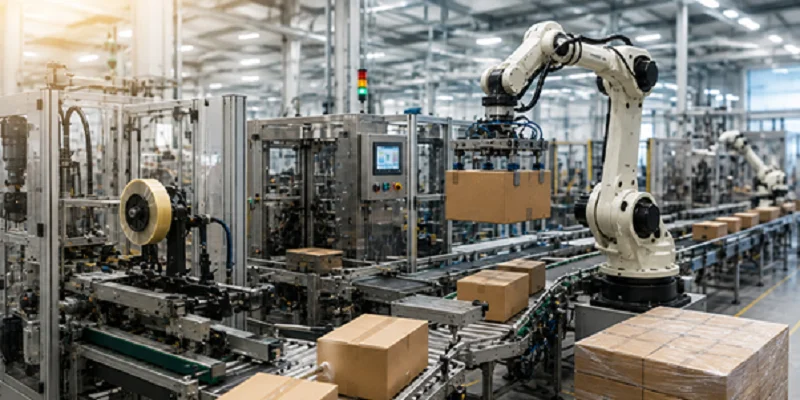
Plastic injection molding has always been a game of tight tolerances and thin margins. A fraction-of-a-second miscalculation in cooling time, a slight drift in barrel temperature, or an inconsistent injection speed can turn a perfect part into scrap. For decades, manufacturers have relied on the experience of skilled operators and trial-and-error tuning to keep production lines running smoothly. That era is quietly coming to an end.
Artificial intelligence is now reshaping how molders approach precision, quality, and throughput. From AI process optimization in injection molding to autonomous injection molding cells that adjust themselves in real time, the technology is no longer experimental — it's becoming a competitive necessity. This article breaks down how AI is transforming the injection molding floor and why manufacturers who adopt it early are pulling ahead.
| Also Read: Sustainable Plastic Injection Molding: Using Recycled and Bio-Based Polymers without Compromising Performance |
Why Injection Molding Needs AI Now
Injection molding involves hundreds of interacting variables: melt temperature, injection pressure, screw speed, cooling time, mold temperature, and material viscosity, to name a few. Traditional process control relies on static setpoints established during initial mold trials. But raw material batches vary, ambient conditions shift, and tooling wears down over time. Static settings simply can't keep pace with these dynamic realities.
This is where AI parameter optimization in injection molding comes in. Instead of fixed setpoints, machine learning models continuously analyze incoming sensor data and recommend — or automatically apply — micro-adjustments to keep the process inside its optimal window. The result is fewer rejected parts, more consistent dimensional accuracy, and less dependency on any single operator's intuition.
Real-Time Process Monitoring: The Foundation of Smart Molding
Before AI can optimize anything, it needs visibility. Real-time process monitoring in injection molding uses a network of sensors — pressure transducers, temperature probes, cavity sensors, and vibration monitors — to stream data continuously from the press to an analytics platform.
Unlike traditional SPC (statistical process control), which often flags problems after a batch has already been produced, real-time monitoring catches deviations as they happen, shot by shot. Operators get instant alerts when a parameter drifts outside acceptable limits, allowing corrective action before a single defective part reaches the next stage of production.
This constant stream of data also feeds machine learning models that learn what "good" production looks like, building a baseline that becomes more accurate with every cycle the press runs.
Predictive Process Control: Getting Ahead of Problems
Monitoring tells you what's happening. Predictive process control in injection molding tells you what's about to happen — and lets you stop it before it does.
By analyzing historical and live data together, predictive models can forecast when a process is trending toward an out-of-spec condition, often minutes or even hours before a human would notice. This shifts quality management from reactive to proactive. Instead of adjusting after a defect occurs, the system nudges process parameters preemptively, keeping the entire run centered within tolerance.
Manufacturers using predictive control report fewer emergency stoppages, smoother changeovers, and significantly less variability between shifts — since the AI doesn't get tired, distracted, or inconsistent the way manual monitoring can.
The Rise of Autonomous Injection Molding
Take predictive control a step further and you arrive at autonomous injection molding — presses capable of self-adjusting without constant human intervention. These systems combine real-time sensor feedback, machine learning models, and closed-loop control algorithms to manage an entire molding cycle independently.
Autonomous cells can compensate for material lot variation, adjust for mold wear, and even fine-tune cooling profiles based on ambient shop-floor temperature — all without operator input. While full autonomy is still emerging across the industry, partial autonomy (where AI handles routine adjustments and flags anomalies for human review) is already delivering measurable gains in consistency and labor efficiency.
AI Quality Control: Catching Defects Humans Miss
Quality control has traditionally depended on manual inspection or fixed-threshold vision systems that catch only what they're explicitly programmed to detect. AI quality control in injection molding changes that equation entirely.
AI Vision Inspection
AI vision inspection in injection molding uses high-resolution cameras paired with deep learning models to examine every part — not just a statistical sample — for flash, short shots, sink marks, warping, and surface blemishes. Unlike rule-based vision systems, AI vision models learn from thousands of labeled images and can generalize to catch subtle or novel defect patterns that weren't explicitly programmed in.
Machine Learning Defect Detection
Machine learning defect detection in molding goes beyond simple pass/fail sorting. These systems classify defect types, trace them back to likely root causes (a specific cavity, a pressure spike, a cooling anomaly), and feed that information back into the process control loop. Over time, this creates a feedback system where quality data actively improves the manufacturing process, not just the inspection step.
Predictive Quality Control
Predictive quality control in injection molding takes this a step further by forecasting the probability that an in-progress shot will result in a defect — based on real-time process signatures — before the part is even fully cooled. This allows manufacturers to intervene mid-run rather than discovering a quality issue only after a batch has been completed and packaged.
AI for Precision Manufacturing
For industries like medical devices, automotive components, and electronics housings, AI for precision injection molding is becoming essential. Tolerances measured in microns leave no room for the kind of drift that manual processes can introduce. AI-driven precision control keeps dimensional consistency tight across thousands or millions of cycles, something that's extremely difficult to sustain manually.
AI-Driven Production Efficiency
Quality and precision matter, but so does the bottom line. AI production efficiency in injection molding initiatives typically focus on three core areas: cycle time, maintenance, and material waste.
Cycle Time Reduction
Cycle time reduction with AI in injection molding comes from optimizing cooling profiles, injection speed transitions, and pack-and-hold timing based on real part behavior rather than conservative default settings. Even shaving a second or two off each cycle compounds into significant capacity gains across a production run of tens of thousands of parts.
Predictive Maintenance
Unplanned downtime is one of the costliest disruptions in molding operations. Predictive maintenance in injection molding uses vibration analysis, hydraulic pressure trends, and motor current data to detect early signs of component wear — screw and barrel erosion, hydraulic pump degradation, or heater band failure — long before a breakdown occurs. Scheduling maintenance based on actual equipment condition, rather than fixed calendar intervals, reduces both unnecessary maintenance costs and unplanned stoppages.
Reducing Scrap
Reducing scrap with AI in injection molding is often where the ROI case is easiest to make. By catching process drift early and adjusting parameters before defective parts accumulate, manufacturers can cut scrap rates significantly — directly reducing material costs and improving overall equipment effectiveness (OEE).
Energy Efficiency
Injection molding presses are energy-intensive, and energy efficiency in AI molding initiatives are gaining traction as energy costs rise. AI models can optimize heating and cooling cycles, reduce idle-time energy draw, and coordinate multi-press energy loads to minimize peak demand charges — all without compromising part quality.
What This Means for Manufacturers
The shift toward AI-enabled molding isn't about replacing skilled operators — it's about giving them better tools. Process engineers and technicians still make the strategic calls, but they're now supported by systems that see patterns across millions of data points, patterns no human could track manually across a 24/7 production environment.
Manufacturers evaluating this transition typically start small: real-time monitoring on a handful of critical presses, followed by AI vision inspection on high-value parts, then predictive maintenance rollouts, and eventually broader process optimization across the full plant floor. Each stage builds the data foundation needed for the next, making incremental adoption both practical and low-risk.
Frequently Asked Questions
What is AI process optimization in injection molding?
It's the use of machine learning algorithms to continuously analyze production data and adjust process parameters — such as injection speed, pressure, and cooling time — in order to maintain consistent part quality and reduce variability.
How does AI improve quality control in injection molding?
AI improves quality control through vision-based inspection systems that examine every part for defects, combined with predictive models that flag potential quality issues before a part is even finished molding.
Can AI reduce cycle times in injection molding?
Yes. By analyzing real part and process data rather than relying on conservative fixed settings, AI can identify safe opportunities to shorten cooling and injection phases, reducing overall cycle time without sacrificing part quality.
Is autonomous injection molding available today?
Partial autonomy — where AI manages routine adjustments and alerts operators to anomalies — is commercially available now. Fully autonomous, lights-out molding operations are still emerging but are actively being piloted across the industry.
Does AI help with predictive maintenance in molding operations?
Yes. AI models analyze sensor data like vibration, temperature, and pressure trends to detect early signs of equipment wear, allowing maintenance teams to service machines before a failure causes unplanned downtime.
Final Thoughts
AI is no longer a futuristic add-on for injection molding — it's becoming the backbone of how leading manufacturers maintain precision, control quality, and run efficient production floors. From real-time monitoring and predictive process control to AI vision inspection and autonomous cycle management, the technology touches nearly every part of the molding process. Manufacturers who invest in these capabilities today are positioning themselves for lower scrap rates, tighter tolerances, and a meaningful edge in an increasingly competitive market.
 Media Pack Download
 Newsletters
 Industrial Events