
High-Performance Plastic Compounds for Automotive Innovation
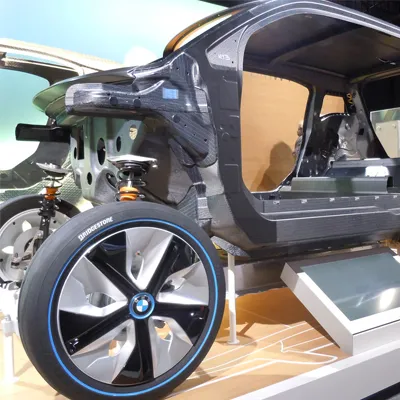
The automotive industry is undergoing a fundamental restructuring all around the world, and efficiency, power, and sustainability are the main factors of all material choices. One of the radical changes is the increased use of high-performance plastics in designing and manufacturing of automobiles. These new generation materials are no longer mere substitutes to metals; they are innovators, performers, and are green.
The Rise of Advanced Polymer Materials for Cars
High-tech polymer materials in cars have developed within the past ten years to include not just an alternative to steel and aluminum but the foundation of the modern automobile design. The automakers have now been investigating the possibility of making thermoplastics work in vehicles to provide flexibility in design, whilst saving on weight immensely. These lightweight motorcycle materials not only enhance fuel efficiency but also help to enhance handling, emission reduction, and battery life in electric cars.
Not only is it a shift of metals but a transformation of performance. The new wave of plastic innovation in the automotive industry aims at the production of high-performance polymers in electric vehicles capable of withstanding extreme temperatures, vibrations, and mechanical stresses without affecting the safety or the durability.
The Need for Lightweight Automotive Materials
Weight reduction has also become an important tool of efficiency. Kilograms saved can enhance energy efficiency either in internal combustion motors or in electric motors. The focus of this evolution is lightweight automotive materials such as reinforced plastic composites. These composites have weight savings up to 50 percent with good strength-to-weight ratios as compared to traditional metal structures.
Carbon fiber reinforced plastics in vehicles, in this regard, have become a game-changer. Carbon fiber has no competition in terms of stiffness and fatigue strength, whether in sports cars or high-end electric cars. Although cost still presents a limiting aspect to the same extent, current developments in manufacturing technologies are enabling high-performance plastics to be utilized in automotive applications and be scaled to a larger range of vehicle segments.
Engineering Thermoplastics for Vehicles: The Backbone of Innovation
Engineering thermoplastics to be used in vehicles are the best when it comes to durability and versatility. These are polyamide (PA), polycarbonate (PC), polyphenylene sulfide (PPS), and polyether ether ketone (PEEK), which are characterized by an integration of mechanical strength and processing. They are needed in products such as fuel systems, under-the-hood housings, and intake manifolds because they cannot be replaced due to their high load-bearing and structural integrity during heating.
One of the advantages of high-temperature-resistant plastics is that they can survive in harsh environments of operation. The compartments of the modern engine and the EV battery enclosures are in need of materials that cannot degrade due to constant thermal and mechanical strains. In this case, plastic super materials such as PPS and PEEK in automobiles have a high influence- they offer stability to 250 °C and still have dimensional precision and resist chemical attack.
Engineering plastics are used in lightweight vehicles not only to reduce weight. It is concerned with the combination of several methods and functions - vibration dampening, corrosion resistance, and even electrical insulation - into a single developed material system.
Market Insights: Growth of High-Performance Plastics in Automotive
| Material Type | Primary Application Area | Advantages | Forecasted Growth (2025–2030) |
| Polyamide (PA 6, 66) | Engine components, air intake systems | High strength, thermal stability | 6.2% CAGR |
| Polycarbonate (PC) | Lighting, glazing, interiors | Optical clarity, impact resistance | 7.5% CAGR |
| PEEK, PPS | Powertrain and EV components | High heat resistance, chemical stability | 8.1% CAGR |
| Carbon Fiber Reinforced Plastics | Carbon Fiber Reinforced Plastics | Superior stiffness, weight reduction | 9.3% CAGR |
The high-performance polymers market of electric vehicles is likely to grow fast due to the necessity of the use of flame-retardant material and thermally stable material in the battery systems. The EV revolution will increase the demand of plastic materials used in EV components that require strict requirements in terms of safety and regulations.
Reinforced Plastic Composites Automotive: A Shift in Manufacturing Mindset
Cars are changing their design and manufacturing through the usage of reinforced plastic composite in automobiles. Thermoplastic composite Glass fiber-reinforced, carbon fiber-reinforced or aramid fiber-reinforced permit the integration of parts, providing more complex geometries at reduced number of assembly operations. This simplifies the production process, reduces the cost, and enhances the structure performance.
A combination of high-temperature-resistant plastics and short or long-fiber reinforcement is among the potential trends in the innovation of plastics in the automotive industry. Through such combinations, materials are created which not only endure under the hood but also in impact prone sections like bumpers, dashboards and door panels.
With increasing demands on sustainability, automotive manufacturers are looking to sustainable automotive polymers - materials that do not compromise performance, but still allow a company to recycle. The use of biobased polyamides, recycled PET composites, and natural fiber reinforcements is redefining the orientation of the manufacturers towards the management of the vehicle lifecycle.
Sustainable Automotive Polymers: A Green Revolution
Fuel efficiency is not the only aim of sustainability in the automotive industry. Nowadays, it also concerns the materials. The vanguard of this shift is sustainable automotive polymers, or recycled or bio-derived polymers instead of fossil-based polymers. In addition to the reduction of carbon footprints by the automakers, such green materials also fulfill the regulatory requirements of recyclability of life.
Interestingly, the development of advanced polymer materials in cars is currently being developed in such a way that they are high-performing and sustainable. An example is biopolyamides that are reinforced with glass fibers and which offer the same mechanical strength as traditional PA 6.6 but have renewable feedstocks. This performance to environmentally responsible equilibrium is pushing the innovation of automotive plastics as never before.
Even carbon fiber reinforced plastics in automobiles, which are considered to be less environmentally friendly, are being rethought. The manufacturers are recycling carbon fiber composites, minimizing waste in production, and reusing it in secondary use - cycling material sustainability.
Plastic Materials for EV Components: Meeting New Challenges
Electric mobility creates new challenges - and opportunities - for plastic materials to use in EV components. Electric cars need materials that are capable of handling heat, that provide electrical insulation, and that act as resistance to vibrations and corrosion. Battery housings, motor mounts, cable insulation, and connector systems are some of the components in automotive design that are increasingly using high-performance plastics.
Electric vehicles made with high-performance polymers such as PBT, PPS, and PA 66 have battery covers and connectors because they are flame-retardant and high voltage insulating. In the meantime, designing thermoplastics that can be used in vehicles makes it easy to design compact vehicles, which would not affect their safety and durability.
The incorporation of light automotive materials in EVs has never been as vital before- mass reduction directly increases the driving range. Furthermore, engineering plastics are all the more critical in lightweight cars as they begin to balance the energy density, crash safety, and thermal management of high-voltage systems.
Impact-Resistant Automotive Plastic Components: Safety and Strength Combined
Contemporary cars require robustness when facing physical forces and the extreme conditions of the environment. This is the area where automotive plastic parts with an impact-resistant quality are essential. ABS, PC, and PP blends are used to produce materials that are of superior toughness and can still be used on interior and exterior components.
Reinforced plastic composite automotive solutions have higher energy absorption than metals in structural areas. They not only improve the crashworthiness but also help to improve pedestrian safety. These materials, combined with high-temperature-resistant plastics, make them reliable in the long term in climatic and driving conditions.
Manufacturers are ever developing the optimum plastic compounds to be used in the automobile industry - striking a balance between toughness, impact, and thermal characteristics. These substances are highly subjected to high-stress environments to prove their suitability within the vehicle's lifetime.
Advanced Materials Driving Automotive Design Innovation
It has never been better than the synergy between material science and design. Innovative materials in the automotive design are helping car manufacturers to transcend the conventional limits of form and functionality. Designers can now experiment with an aerodynamic form of design that in the past due to the use of metal.
From the transparent polycarbonate roofs to the elastic polymer body panels, the innovation in plastic in the automotive world has opened up a new stream of creativity. High-performance electric vehicle polymers can be used to introduce smaller, more integrated parts - fewer part count and easy assembly lines.
One of the new trends in high-technology polymer materials in automobiles is smart plastics-materials that have sensors or conductive components incorporated into them. These allow self-diagnosing vehicle components and real-time data collection, which further extend the horizons of automotive intelligence.
Prospects: The Second Book of the History of Automotive Plastic Innovation
The high-performance plastics will continually develop in the near future of 2030s as the automotive electrification, autonomy and sustainability are persistently gaining pace. This is because the future of manufacturing strategy will be determined by a combination of lightweight automotive materials, sustainable automotive polymers, and reinforced plastic composites.
Continuous development of hybrid material systems and overmolding technology will play the role of engineering plastics in lightweight vehicles in structural components, where traditionally metals can be utilized. In the same vein, EV parts made of plastic will evolve to feature battery housings of the next generation, which have built-in thermal and electrical protection.
As one can understand, the high-tech materials that are driving the innovation of automotive design are not only making cars better, but also changing the whole automotive value chain, including design and prototyping, production, as well as recycling.
It is no longer whether plastics can substitute metals, the question is - how far can plastics take the future of mobility?
Conclusion
High-performance plastics in the automotive engineering sector are a dynamic, transformative, and immensely bound with innovation. Manufacturers are also setting new standards of performance, safety, and sustainability through advanced polymer materials in cars, engineering thermoplastics in cars, and carbon fiber reinforced plastics in cars.
The use of sustainable automotive polymers, impact-resistant automotive plastic parts, and high-temperature resistant plastics attests to the fact that it is not on strong and lightweight materials that the industry's future will be seen, but on environmentally responsible materials.
With the further development of advanced materials to facilitate evolution in vehicle design, the automotive industry will be able to redefine what is possible, which is transforming every vehicle into a masterpiece in terms of performance, efficiency, and technological excellence.
 Media Pack Download
 Newsletters
 Industrial Events