
Plastics in Automotive Design: Lightweight Solutions for Enhanced Efficiency

The automobile industry has been experiencing a revolution in the past generation, as car manufacturers endeavor to design and produce not only better or efficient cars but environmental friendly cars. The change we are witnessing here is the application of plastics in the car manufacturing field and one of the greatest transformations as to usage area of the automotive plastics is that automobiles look trendy now. Most of the time, plastics therefore provide light weight products that lead to increased efficiency, decreased emissions and improved performance. Here in this article, we are going to discuss about the utilization of plastics in the automotive sector, advantages and its implications towards a green environment.
The Shift to Lightweight Materials
The desire for lightweight vehicles is one of the roles through which the employing of plastics in the automotive sector is on the rise. Historically, the major materials which were used in car manufacturing included steel and aluminum. These materials are strong and durable but they are also very heavy and the weight of a car is dictated by the mass of its components.” A heavy vehicle needs more fuel to be run than a lighter vehicle and hence the larger emission and lower efficiency.
Plastics is much lighter offering the required strength and durability of the part while saving much more weight. This is because when using metal components in the production of cars, car manufacturers may decide to replace the metallic part with the plastic part hence reducing the total weight of the car by a considerable margin. This weight reduction enhances the fuel economy and consequently leads to the decreased emission of carbon monoxide which is in consonance with the international drive towards the reduction of carbon footprint for transport vehicles.
Enhanced Fuel Efficiency and Performance
Perhaps one of the greatest benefits that can be derived from utilizing plastics in automotive design is better fuel economy. Generally, the overall weight of a car has an influence on its power consumption; lesser the weight, the lesser effort the engine has to exert so as to move the car forward. Analysis of data taken from relevant industries shows that use of light weighting results in fuel efficiency gains of 6-8% for every 10% decrease in vehicle weight.
Plastics also help in matter of aerodynamics ; which is so important in racing events. Some of such plastic components include bumpers and body panels that can be moulded into patterns that will help in cutting down on drag and increasing the air flow. This in turn improves the efficiency of the vehicle and the fuel consumption rate of the vehicle.
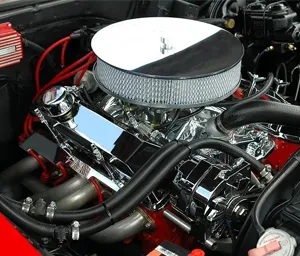
Also, lightweight use of plastics can enhance a car’s acceleration, braking force and maneuverability, making the car to be more entertaining to use.
Durability and Versatility
Plastics for the most part are known to be light but they are exceptionally strong and can be used in a variety of ways. Automotive plastics are generally designed to perform well under high temperature as well as corrosive attack and mechanical stress. This makes them suitable for different uses in a car such as interior and exterior parts.
For example, dashboards, door panels, and parts of the seat are made of plastics because of its characteristic features such as flexibility for use and longer durability because they do not get easily degraded. Fenders, bumpers, and car mirrors are among the exterior parts which may require the usage of plastics because, unlike metals, they provide extra resilience, absorb impact force and hardly corrode. It also provides durability to the vehicle by minimizing the repairing rate that is also a good sign of lowering the cost to the consumer.
Environmental Benefits of Plastics
A common issue arising from the automotive production and usage is the effects on the environment that the manufacturing and usage of automobiles make. Despite the sources of plastics being fossils, its use in automotive design still aid in achieving sustainable future. It is also understood that the production of the plastic parts is less energy consuming than metal components thereby the emission of green house gases during the manufacturing process is low.
Secondly, the relatively low densities of plastics that the automotive industries use means that it is easier to achieve fuel savings throughout the life of the car and hence less pollution is made. Manufacturers are also using more of bio-based plastics and recycled plastics in cars’ production making plastics parts even more environmentally friendly.
Plastics in Electric Vehicles (EVs)
Among the materials, there is micro and lightweight components such as plastics, has been boosted by the emergence of electric vehicles (EV’s). They are large structures keeping large packs of batteries since they power the vehicle and the batteries bring asymmetrical added mass. However, plastics help the manufacturers to maintain the overall weight of the EVs low because they incorporated the material in the design of the cars.
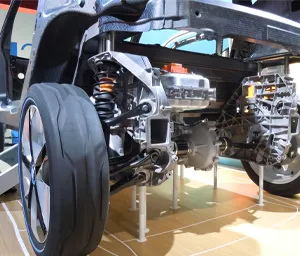
Since the weight of a lighter EV is lower, such cars can cover more distance within a single charge and therefore are more usable. Also plastics are used in the insulation of electric components as well as the wires making the electric vehicles more safe and efficient as well.
Future Trends in Automotive Plastics
In conclusion it can be said that the future of plastics in automotive design is bright given the evolution in materials science. There are currently signs that researchers are creating improved types of plastics that have more heightened strength, heat moulding, and sustainability prospects as well. For instance, carbon fiber reinforced plastics, which are in the course of being researched for applications that would enhance their high strength with the benefit of low density.
Some other trends that are affecting the automotive plastics include recycling and sustainability. The automobile industry has shifted its attention on designing and manufacturing cars such that the plastic parts used in the automobiles have a record of being recycle and reused, in a bid to minimize on environmental degradation.
Conclusion
Today plastics are very important car materials that suppliers are providing automobile designers for better fuel efficiency, higher speeds, and environmentally friendly cars. Plastics help to lower fuel consumption and emission rates besides providing a better control of the vehicle due to the conservation of the general weight of vehicles. With advancement in the automotive industry, the importance of plastics is set to increase, to create a positive future in the automobile industry.
 Media Pack Download
 Newsletters
 Industrial Events