Innovative Applications of Plastics in Emerging Technologies

Plastics was widely used because of its flexibility, ability to endure as a material and also due to its cheap nature. Despite this, its uses are now expanding towards exclusive new areas in possibilities created by modern technologies. The use of plastic is revealed in this article as being applied in bit astonishing ways across various fields and how these advancements are shaping the future.
1. Flexible Electronics
Organic electronics or flexible electronics are the new generation inventions which are changing the conventional views on technology. Regular electronics are not flexible or portable but with the help of plastics flexible, lightweight and even foldable gadgets can be produced. Organic light-emitting diodes (OLEDs) employed in displays and the organic photovoltaic cells are perfect examples.
Color flexible OLEDs could be another example. It is flexible and pliant in nature for the use in wearables with tiny screens and even in curved screens and extendable screens that are rollable in nature.

2. 3D Printing
Additive manufacturing or more commonly known as 3D printing is revolutionizing many industries including; health care and automobile. Popular materials include PLA that is polylactic acid and ABS that is acrylonitrile butadiene styrene since it is easy to process, and it is cheap.
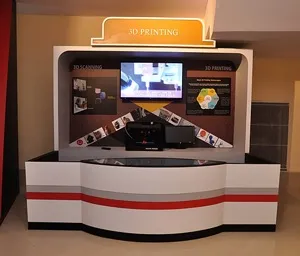
Some of the creative uses of 3D printing includes making of special artificial limbs, architectural maquettes and even some components for the aerospace industry. The freedom of designing and shaping is very high and enables structural designs and features to be printed through the plastic material.
3. Medical Devices
Medical area has shown significant improvements that are attributed to the improvements in the area of plastics technology. They are presently employed in sutures and implants that disintegrate in the human body without the need for further surgery.

Disposable microfluidic systems, represented by elements of lab-on-a-chip, which are extensively used in diagnostics, are made of plastic because of its low cost and possibility to work with polymers. They are also used continuous wearing health monitor devices that are light in weight but comfortable to be worn all the time.
4. Smart Textiles
Smart textiles refer to clothing items that have electronics incorporated in their production and plastic material is involved here. Conductive polymers are applied on textiles to make them conductive to be able to interface with sensors and electronics.

These textiles can include health-monitoring clothing for patients, smart attire that can communicate, and even military uniform that changes with the weather.
5. Sustainable Packaging
There are certain environmental issues that are now compelling manufacturers to find better solutions such as packaging and here, plastics are playing a major role. Eco friendly and compostable plastics give a chance to use renewable resource instead of petroleum based packaging.

These materials also degrade faster and safely than the traditional plastics hence having lesser effects on the environment. Antimicrobial agents or oxygen scavengers as incorporated in the active packaging solutions help prolong the shelf life of foods, and drugs.
6. Advanced Aerospace Components
In aerospace, weight control is significant in fuel consumption as well as other aspects of the performance. High-performance thermoplastics like thermoplastic composites, polyimides and related products are commonly used in aircrafts and spacecrafts to attain these goals.

These materials possess excellent specific strength and can endure temperature variation and other harsh conditions; the most appropriate use of these materials is on items such as frames, trusses, hinges, and other similar parts found within a given structure.
7. Energy Storage and Conversion
Currently, plastics are also being incorporated into energy storage and conversion devices. Research is also being carried out in conductive polymers and plastic-based super capacitors to improve energy storage products.

They can be incorporated into bendy and lightweight energy conversion and storing devices that are useful in the development of batteries and capacitors used in electronics and renewable energy.
8. Consumer Electronics
Incorporation of new plastics as materials in the manufacture of consumer electronics is enabling the producers to come up with more stylish gadgets. Polycarbonate as well as acrylic are favorite materials for smartphone, tablet and laptop housing because of their high impact strength.
Furthermore, plastic based nanomaterials are being researched for the enhancement of electronic devices and at the same time containing the manufacturing cost.
Conclusion
The given examples of using plastics in the technologies that are being developed demonstrate the unlimited possibilities of this material. Whether in the creation of electronic papers or high-end aerospace parts, plastic is moving the goalposts and setting the pace in different fields.
Thus, it is only logical to state that as technologies advance, plastic will always remain a significant factor in determining the future, people should not only obtain products that are found useful by society but also which are environmentally friendly, and flexible.
 Media Pack Download
 Newsletters
 Industrial Events