Innovative Plastic Recycling Technologies Transforming Waste Management

Diffusion of plastics is among the most significant problems that the society has faced in the current age. Every year many tons of plastic wastes are chucked to the landfills, seas, oceans, and any natural system with enduring negative impacts on people and the environment. Traditional methods for dealing with plastics have been in the market for several years now but advances in technology is providing new means of dealing with it. These innovations are not only designing solutions in relation to the escalating motion of plastics, but they are generating novel opportunities for sustainability and recovery of raw materials.
Therefore, in this article, the reader will be presented with insight into modern approaches to recycling plastics, as well as demonstrations of how each technology functions, its application, strength, and role in advancing a circular economy.
The Plastic Crisis: A Growing Challenge
However, to appreciate the novelties and peculiarities of the solutions under consideration, it is pertinent to begin by giving one a foretaste of the daunting task that is managing plastic waste. Plastics are manufactured products which originate from petrochemicals and they are a common feature in most societal use since they are cheap, durable and are versatile in use. But on the same note, these properties that make them easy to use also make it so difficult to dispose the same products.
The types of plastics that manufacture occupy majority are considered to take time of up to 500 years to degrade and are not biodegradable. A United Nations Environment Programme (UNEP) report gives a projection that approximately 8 million tons of plastic is dumped into the seas every year and affect life and ecosystems. On land, eradicating the plastics meant burning or throwing them in the dumps with the intention of allowing the plastics to emit toxic substances to the soil and the aerial atmosphere.
A major issue that contributes to the inefficient recycling process of traditional plastic recyclers is the type of plastic accepted by the facility, non-recyclable material that is often found mixed with the plastic and lack of proper infrastructure. Often, plastic waste is, at best, downcycled, a process through which it is recycled to make materials of lower quality that cannot be employed in products with great value-adds. It so means that the actual amount of the plastic waste that gets recycles is almost minimal and the rest is either dumped in the landfills or incinerated.
Looking at the ever rising issue in concern to plastic waste and our environment, new and improved uses of recycling plastics are being adopted to ensure the recycling process is generic, fast and cheap. All such trends not only help in the fight against the use of plastic waste but also introduce the topic of new opportunities in the management of waste.
1. Chemical Recycling: Breaking Down Plastics to Build New Materials
Chemical recycling also known as advanced recycling is a step up in the technology of the recycling process. It could therefore be accurately described as a completely different process from the mechanical recycling processes that involve the dismantling, remanufacturing the plastics and reshaping them into new articles from the mass of the waste stream and other forms of plastics.
There are several methods within chemical recycling, including:
- Pyrolysis: This is a method used in disposing used plastics where these are burnt under conditions of no oxygen and in so doing decomposes polymers into different other small molecules. This process gives other useful co-products such as synthetic oil which can be further refined into various fuel, chemicals and /or plastics. The major benefit of pyrolysis is therefore its versatility which can handle mixed and contaminated plastic waste – an issues with traditional recycling methods.
- Depolymerization: Plastics recycling is a way in which plastics are broken down back to polymerization in a bid to acquire monomers. These monomers can then be used to produce virgin-quality of plastic materials so that the plastic could be ‘recycled back’ to its original state. This technology is very effective when reconstructing other products made of plastics like PET bottles that are used in packaging beverages.
- Gasification: Another broadly defined chemical recycling method is gasification: The technology turns the collected plastic waste into syn-gas or synthesis gas through the process of heating and pressing the material under a limited amount of oxygen. This syngas can be utilized as a fuel for electricity production or converted into products that can be utilized to produce other products.
Chemical recycling technologies are more capable of recycling many more types of plastics than traditional recycling; ones such as multiple layered packaging, or any form of plastic waste likely to be contaminated with other material. Chemical recycling deals with the returning of plastics into their simplest form of utilization which makes it unique.
2. Enzyme-Based Recycling: Nature’s Role in Plastic Degradation
Other modern trends in the recycling of plastics are enzymatic recycling, a process that uses enzymes to decomposition plastics into their molecular structures. This process is still relatively young, but it appears to have nearly limitless potential for lifting the scourge of plastic waste.
Scientists have identified particular enzymes that are capable of degrading plastics including PET into their original monomers. These enzymes function by breaking up firstly the chemical bonds linking the plastic molecules so as to make it easier to recycle the material.
- PETase and MHETase Enzymes: PETase is an enzyme which was found in a bacterium Ideonella sakaiensis that feed on PET plastic. It is possible to catylize the degradation of PET with this enzyme and another enzyme known as MHETase to obtain monomers that can be used in formation of PET plastics. This process can be done at ambient temperature meaning energy and resource utilization is efficient and sustainable.
- Biodegradable Plastics: Biodegradable plastics is another field where enzymes have started to demonstrate potential in the future. This type of plastics is special in the way that they are more easily processed at the natural conditions. By the use of enzymes this breakdown process can be enhanced so that the time taken for the plastic waste to disintegrate is considerably minimized.
For many types of plastics, enzyme-based recycling is still in the research and development phase, but it provides a sneak peak into the cyclical future for waste disposal. If a similar process is applied, it could effectively decrease the outlet of plastics into landfills and incinerators, providing the plastic waste an environmentally friendlier outlet.
3. Automated Sorting and AI-Driven Recycling
So one of the biggest problems in recycling is that many plastics are combined together which causes a lot of difficulties. Manual sorting of some plastics is time-consuming and cannot effectively be done but, thanks to the advanced use of technology, automation and artificial intelligence.
Specifically, the AI systems with the help of machine learning techniques is used to detect, sort and segregate various types of plastic materials according to their chemical characteristics, color, geometry, and density.
These automatic systems are even capable of sorting large quantities of the disposed plastic products in a shorter time and with higher precision as compared to the employees.
- Robotic Sorting: In waste streams, robotics systems control with vision systems based on AI to dispense and sort out the plastic materials. These robots can tell which plastic is which and sort them into their correct bin which allows recycling to be easier and minimize contamination.
- Optical Sorting: Optical sorting is a process that utilizes lasers and sensors to distinct as well as sort the plastic items depending their color or kind. This technology is often utilized in material recovery facilities (MRFs) to enhance the sorting system, and subsequently the purity of recovered plastic streams.
Therefore, knowledge about the state of the art and its connection to AI and automation shows that the progress of the recycling of plastic can be effective. These technologies can also be applied in enhancing the rate of recycling of plastics; the rate at which the plastic wastes are taking to the landfills.
4. Upcycling: Turning Plastic Waste into Valuable Products
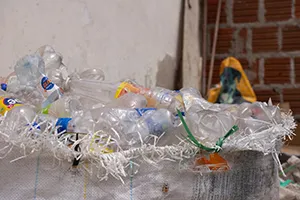
Upcycling can, however, be viewed as a subcategory of recycling; however, it does not encompass the concept of down cycling of objects but actual recycling of the same. It aims at turning the waste collected into plastic products that are of higher value than the waste used in the process. Plastic up cycling, plastic can be recycled for making furniture, clothes, construction materials, and even art among others.
Plastic waste can now be given a higher value by companies who have innovated on how they can repurpose the material. For instance, the bottles can be reduced into fibers for apparel and plastic waste can be processed to make structures/erections. This approach is not only effective in minimizing the plastic waste it also generates value creation and business models in circular economy system.
Conclusion: The Path to a Sustainable Future
New plastic recycling technologies highlighted in this article are revolutionizing how the world handles the plastic waste problem. Chemical recycling, artificial intelligence based sorting systems, and enzymatic recycling: But these technologies made available are the solutions for a better circular economy.
As these innovation progresses, the will greatly assist in combating the pollution brought by plastics, the depletion of scarce natural resources and greenhouse gases emissions.
As with previous technologies, we must bear in mind they do not alone offer a solution to the plastic problem. Reducing waste generation and collection, encouraging community use of biodegradable products and affirming cultural transformation to sustainable consumption and production must be put in place for the society to solve the problem of plastic waste in a sustainable manner.
Meanwhile, these state-of-the-art technologies are a light about the better world ahead, where irrational and uncontrolled use of plastics results in plastic waste and pollution is not something that humanity has to endure, but beneficial factor and valuable resource that can be used to improve lives of people.
 Media Pack Download
 Newsletters
 Industrial Events