Next-Generation Functional Masterbatches: UV, Antimicrobial, Anti-Static and Barrier Solutions for High-Performance Plastics
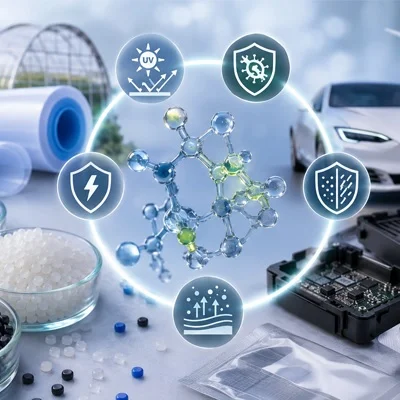
When Plastics Stop Being Just Plastics
Not long ago, manufacturers selected plastics primarily based on cost, mechanical strength, and ease of processing. Today, those criteria represent only the starting point. Modern products—from medical devices and electric vehicles to pharmaceutical packaging and smart consumer electronics—are expected to perform far beyond their structural role. They must resist ultraviolet degradation, suppress microbial growth, prevent electrostatic discharge, extend product shelf life, and maintain performance in increasingly demanding operating environments.
This evolution has transformed Functional Masterbatch technology from a simple additive carrier into a strategic enabler of product innovation.
Instead of redesigning an entire polymer formulation, manufacturers can now incorporate highly engineered functional solutions during processing to deliver multiple performance benefits simultaneously. These advanced masterbatches are helping processors create lighter, safer, longer-lasting, and regulation-ready products while improving manufacturing efficiency and reducing total ownership costs.
For OEMs, converters, packaging manufacturers, and product designers, the question is no longer whether to use functional additives—it is which combination of functionalities delivers the greatest competitive advantage.
| Also Read: Bio-Based and PFAS-Free Plastic Additives: The Future of Sustainable Polymer Formulations |
Why Functional Masterbatches Are Becoming a Competitive Differentiator
Across industries, plastic components are being asked to survive conditions that traditional polymers were never designed to handle.
Consider a few examples:
- Outdoor telecom enclosures exposed to continuous sunlight
- Medical equipment requiring continuous antimicrobial protection
- Electronics vulnerable to electrostatic discharge
- Pharmaceutical packaging demanding superior oxygen barriers
- Electric vehicle battery systems operating under thermal and electrical stress
- Food packaging requiring longer shelf life without increasing material usage
These applications have accelerated demand for High-Performance Plastics capable of delivering multiple functionalities simultaneously.
Instead of developing entirely new polymers, manufacturers increasingly rely on Specialty Plastic Additives integrated through advanced masterbatch technology to achieve targeted performance improvements while maintaining processing flexibility.
The result is a new generation of Functional plastic compounds that combine mechanical integrity with intelligent performance characteristics.
The Rise of Multi-Functional Masterbatch Systems
Earlier generations of masterbatches generally addressed a single requirement—color, UV resistance, or slip enhancement.
Today's market increasingly favors multifunctional formulations capable of delivering several performance improvements within one solution.
Examples include:
- UV resistance + antimicrobial protection
- Anti-static properties + conductivity
- Oxygen barrier + moisture control
- Flame retardancy + UV stabilization
- Scratch resistance + antimicrobial surfaces
Rather than adding multiple incompatible additives separately, manufacturers are developing integrated masterbatch platforms that simplify production while improving formulation consistency.
This approach reduces:
- Material handling complexity
- Processing variability
- Inventory management
- Formulation development time
- while improving overall product reliability.
UV Stabilizers: Protecting Plastics from Environmental Degradation
Sunlight remains one of the greatest threats to polymer longevity.
Ultraviolet radiation gradually breaks polymer chains, resulting in:
- Brittleness
- Surface chalking
- Color fading
- Loss of tensile strength
- Reduced impact resistance
Modern UV Stabilizers for Plastics are designed to absorb or neutralize harmful UV radiation before irreversible damage occurs.
Instead of simply slowing discoloration, today's advanced stabilization systems significantly improve long-term mechanical performance.
Applications include:
- Agricultural films
- Outdoor furniture
- Solar installations
- Building materials
- Automotive exterior components
- Infrastructure piping
- EV charging stations
The newest innovations in UV protection for polymers also account for increasingly harsh climate conditions, allowing manufacturers to guarantee longer product lifecycles in demanding outdoor environments.
For infrastructure owners, improved UV stability translates directly into reduced maintenance costs and longer replacement intervals.
Antimicrobial Masterbatches Are Redefining Surface Hygiene
Hygiene has become a permanent design requirement across healthcare, food processing, transportation, and consumer products.
Traditional cleaning methods remain essential, but they cannot continuously prevent microbial growth between cleaning cycles.
This is where Antimicrobial Masterbatch technologies provide significant value.
Unlike surface coatings that may wear away, antimicrobial agents incorporated throughout the polymer matrix provide long-term protection against bacterial growth.
Modern Antimicrobial polymer technology is being adopted in:
- Medical equipment
- Hospital furniture
- Laboratory devices
- Pharmaceutical packaging
- Water purification systems
- Food processing equipment
- Public transportation interiors
- Consumer appliances
Many advanced systems utilize silver-ion technologies, zinc-based compounds, or other engineered antimicrobial solutions designed to maintain effectiveness throughout the product lifecycle.
Growing healthcare regulations continue driving demand for Medical-grade plastic compounds that combine antimicrobial performance with strict biocompatibility and regulatory compliance.
Anti-Static and ESD Solutions for an Electrified World
As electronic devices become smaller and more powerful, electrostatic discharge has emerged as a major reliability concern.
Even minor static charges can damage:
- Semiconductor components
- Circuit boards
- Battery systems
- Medical electronics
- Industrial automation equipment
Manufacturers increasingly rely on ESD Protection Plastics to prevent charge accumulation while maintaining mechanical performance.
Advanced Electrostatic discharge (ESD) materials function by safely dissipating electrical charges before sensitive electronics can be damaged.
Common applications include:
- Electronics packaging
- Battery trays
- Semiconductor manufacturing equipment
- Cleanroom containers
- Robotics
- Medical diagnostic equipment
- Industrial automation systems
Unlike earlier carbon-filled materials that compromised aesthetics, modern technologies now deliver conductivity while maintaining improved appearance and processing characteristics.
Conductive Plastic Compounds Are Expanding Design Possibilities
Conductivity in plastics is no longer limited to niche industrial applications.
Today's Conductive Plastic Compounds enable designers to replace heavier metal components while maintaining essential electrical performance.
Applications now include:
- Electric vehicle battery enclosures
- Charging infrastructure
- Industrial sensors
- Wearable electronics
- Aerospace systems
- Smart manufacturing equipment
Advanced conductive systems may utilize:
- Carbon nanotubes
- Carbon black
- Graphene
- Hybrid conductive fillers
The objective extends beyond conductivity itself.
Manufacturers increasingly seek lightweight materials that combine:
- Structural strength
- Chemical resistance
- Corrosion resistance
- Electrical functionality
- Design flexibility
These materials are becoming critical for next-generation mobility and industrial electrification.
Oxygen Barrier Technologies Are Extending Product Shelf Life
Packaging has shifted from passive containment to active product protection.
Modern food and pharmaceutical packaging increasingly depends on Oxygen Barrier Packaging technologies to preserve freshness and product quality.
Even minimal oxygen ingress can lead to:
- Oxidation
- Nutrient degradation
- Flavor loss
- Reduced pharmaceutical stability
- Shorter shelf life
Advanced barrier masterbatches reduce oxygen transmission while allowing manufacturers to continue using lightweight plastic packaging.
These technologies play an important role in:
- Ready-to-eat meals
- Dairy products
- Pharmaceutical blister packs
- Nutraceutical packaging
- Medical device packaging
- Flexible films
The growing adoption of Active Packaging Materials goes even further by incorporating oxygen scavengers, moisture regulators, antimicrobial technologies, and freshness-preserving systems directly into the packaging structure.
This transforms packaging from a passive container into an active component of product preservation.
Combining Multiple Functionalities into a Single Formulation
One of the most significant developments in recent years is the shift toward multifunctional formulations.
Rather than selecting separate additive packages for each performance requirement, manufacturers increasingly specify integrated solutions that combine several capabilities.
A medical device housing, for example, may require:
- UV resistance
- Antimicrobial protection
- Chemical resistance
- Dimensional stability
- Color consistency
Similarly, an EV battery component may combine:
- ESD protection
- Conductivity
- Flame retardancy
- Heat stability
These integrated Performance-enhancing additives simplify manufacturing while reducing compatibility challenges during processing.
Sustainability Is Driving Smarter Functional Design
Functional performance and sustainability are no longer opposing goals.
Manufacturers increasingly expect additive systems to improve environmental performance while extending product life.
This includes:
- Longer-lasting outdoor plastics
- Reduced material consumption
- Lightweight component design
- Improved recyclability
- Lower replacement frequency
- Reduced food waste through better barrier performance
Instead of simply improving durability, modern Plastic durability enhancement strategies contribute directly to lifecycle sustainability by reducing premature product failure and minimizing resource consumption.
The industry is also exploring additive systems compatible with recycled polymers, enabling converters to maintain high performance while increasing recycled content.
Choosing the Right Functional Masterbatch Partner
Selecting a supplier today involves much more than reviewing a product catalog.
Successful manufacturers evaluate partners based on their ability to support formulation development, regulatory compliance, and long-term innovation.
Key considerations include:
- Polymer compatibility
- Processing stability
- Regulatory certifications
- Dispersion quality
- Color consistency
- Migration performance
- Long-term durability
- Global technical support
- Custom formulation capabilities
- Supply chain reliability
As performance expectations continue rising, collaborative development between resin suppliers, additive manufacturers, converters, and OEMs is becoming increasingly important.
The most successful projects begin with application requirements—not additive selection.
The Future of Functional Plastics Is Intelligent, Integrated, and Industry-Specific
The next generation of functional plastics will move beyond solving isolated problems.
Emerging masterbatch technologies are expected to incorporate smart sensing capabilities, self-healing characteristics, thermal management, antimicrobial intelligence, advanced barrier performance, and enhanced electrical functionality within a single polymer system.
Artificial intelligence is also beginning to accelerate additive formulation by predicting optimal combinations for specific applications, reducing development timelines and enabling more customized material solutions.
For industries such as healthcare, automotive, electronics, packaging, aerospace, industrial automation, and consumer goods, Functional Masterbatch technology is rapidly becoming a strategic differentiator rather than a manufacturing afterthought.
Organizations that invest early in advanced Functional plastic compounds and next-generation additive platforms will be better positioned to deliver higher-performing products, extend service life, improve sustainability, and respond more quickly to evolving market and regulatory demands.
Ultimately, the future of High-Performance Plastics will be defined not just by the polymer itself, but by the intelligent functional technologies engineered into every pellet before it even reaches the production line.
Coming Next:
As sustainability reshapes material innovation, the plastics industry is moving beyond performance alone to rethink the chemistry behind additives themselves.
In our next article, "Bio-Based and PFAS-Free Plastic Additives: The Future of Sustainable Polymer Formulations," we'll explore how renewable feedstocks, fluorine-free technologies, and next-generation additive systems are helping manufacturers balance high performance with evolving environmental regulations, circular economy goals, and growing customer demand for safer, more sustainable polymer solutions.
 Media Pack Download
 Newsletters
 Industrial Events