
Plastic Waste Crisis: Technological Solutions for a Sustainable Future

It is very sad but true: the primary enemy of the environment of the world is plastic. As the use of plastic escalates fore industries such as packaging, construction and healthcare, so does the problem of waste management become a canker to environmental conservation. Albeit being valuable in several applications, plastic lasts for about 300 years to degrade and detrimental to wild life and human beings as well as the environment. But as we look at modern technological processes we see tangible ways to reduce these problems from enhanced recycling techniques to the emergence of entirely bio-degradable products.
The Scale of the Plastic Waste Problem
Ticking as an environmental agenda of the entire world, plastic waste is triggered mostly by the fact that it cannot decompose easily. Currently, millions of tons of plastic waste are ending up in landfills, sea, river, and many other places. More recent from the United Nations estimation; about 8 million metric tons of plastic are directly released into the oceans. Plastics materials are tough, light and can be used in many ways which makes it easy to be used.
But this same characteristic poses a problem for waste disposal because plastic can exist in the environment for several hundreds of years.
The mountain of plastic waste is one of the biggest problem the world has been grappling with for so many decades. Pine and oil from single use items on their own are significant culprits, especially plastics in the form of bottles, bags, straws and packaging that are used once and chucked. These plastics end up in these natural ecosystems and are dangerous to animals and other wildlife. Marine wildlife especially ingest plastic wastes thinking they are food and may die or be killed by predators, they become trapped in the wastes. In addition, if plastics disintegrate to small fragments known as ‘microplastics,’ they penetrate the food chain and reaches humans.
Current Recycling and Disposal Methods
Another type of recycling system is mechanical recycling, which could only provide a general solution the imminent issue of plastic wastes. Mechanical recycling means collection of used plastics, cleaning them, cutting them into small pieces and then using them in manufacturing new products. However, this process is limited because it is found in practice that the plastic objects decrease in quality each time they are recycled.That is why most plastic materials are recycled several times in cycles before they attain their useless state.
Secondly, there are many plastic products available in the market and none of them can be recycled for reuse. Plastic types and it chemical characteristics and many of them are unable to pass through conventional recyclability. This lead to plastics entering the recyclable stream, further crowding out plastics recycling as a process.
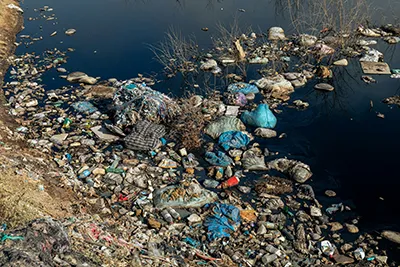
Other major ways through which the management of plastics is done include landfilling and incineration and while doing this; they have their own problem. As for now it is seen that plastic wastes are being filled up in the landfills and as this material stays in the landfill, it leaches out injurious chemicals into the ground water. Whilst incineration transforms waste to a small volume that occupies less space, and in the process gives off toxic gases that pollutes the air, and constant production of toxic gases, and bad greenhouse gases perpetuates the greenhouse effect.
Technological Innovations in Plastic Recycling
Out of all the technological solutions that are effective to use in relation to the plastic waste issue, the best opportunity is indicated to be recycling. Chemical recycling has been on the ascendancy as technology is advancing to develop the recycling of plastics into useful feeds.
1. Chemical Recycling
Whereas mechanical recycling involves turning used plastic into new products, chemical recycling involves breaking the plastics back into their molecular chain and then use them to create new plastics or products. This process involves the treatment of the plastics by solving them into their monomers then polymerizing to other plastics. Chemical recycling seems to have a better ability as compared to mechanical recycling in handling a larger number of plastic products.
Some of the companies have thus developed special procedures in chemical recycling. One of them is pyrolysis where through the use of high heat in the absence heir the plastic is converted to oil and gas. These byproducts can then be embodied, used as feedstocks for newer plastics or even as a source of fuel. Another technique involves some sort of enzymatic degradation which they cleave the plastic into its monomers. These biotechnological approaches have proven viable especially for the degradation of polyethylene terephthalate (PET) plastics, which are characteristic of bottles.
2. Plastic-to-Fuel Technologies
Another example of solution which is used all around the world is known as the plastic to fuel technology: essentially, it means that people take plastic waste and turn it into fuel. It turns out that pyrolysis, and other methods are used to crack plastics into liquid or gaseous fuels that can be used in energy generation. This technology minimizes the amount of plastic waste while at the same time generates fuel energy that competes with fossil energy. Plastic-to-fuel technologies are still in their relatively early stages of commercialization but these process show potential for efficient waste reduction and energy production.
3. Biological Recycling
Biological recycling is being seen as a new innovation in which enzymes or microorganisms are used to break down plastic material.
Some bacterial and fungal species can reduce plastic material to easy digestible compounds since they are naturally endowed with that aptitude. Scientists are now striving to optimize these processes for practical use involving large number of data sets. As it stands, microbial recycling may be a new green approach towards dealing with plastics since the microbes developed will only break down plastics like polyethylene and polystyrene.
Biodegradable Plastics: A Potential Solution
However, the most important task of maximizing the effectiveness of the process of recycling remains the solution of the problem of the increase in the amount of recycled products through the use of materials that can be degraded by the environment. Apparently, biodegradable plastics are those that t decompose in the environment faster than the petroleum based ordinary plastics. Bioplastics can be of two types: one type of bioplastic is made from renewable material such as corn starch or sugarcane that makes up the raw material, one type of bioplastic is designed to degrade when exposed to light, heat or moisture.
Biodegradable plastic for example Polylactic Acid (PLA) is produced from fermented plants sugars. PLA is biodegradable and could break down in home composting hence a better option than other single use plastics such as packaging and cutleries. Many other biodegradable plastics such as polyhydroxyalkanoates (PHA) are synthesized by microorganisms and can be decomposed by bacteria in the soil or in water solutions.
Nonetheless, biodegradable plastics are not free from difficulties. Although they biodegrade faster than normal plastics, they need to be in an environment conducive so as to fully decompose. In some of these environments such as a landfill, they may not degrade as planned. However, biodegradable plastics production at for instance Industrial scale may come with other negative effects such as changes in the land use for raising crops such as corn or sugarcane.
Plastic Alternatives and Innovations in Material Design
Along with the development of advanced forms of recycling and biodegradable plastics, a large share of research aims at the utilization of substitute for plastics in different applications. Such options are paper, glass, and metals; new inventions such as plant-based plastic, and food wrapping that is edible.
1. Edible Packaging
An emerging approach in the current society is the use of edible packing. Also known as food cellophane, edible packaging materials are made using edible products such as seaweed, rice or starch, which also allows the packaging material to be eaten together with the product it has enclosed. This technology can be particularly applied to food packaging where shed load of plastics is used in the food industry. Businesses have gone as far as creating food packaging that is consumable packaging that would dissolve or can actually be food for consumption as such no more plastic.
2. Plant-Based Plastics
Plant-based plastics is the other option it can be harvested from crops like corn, sugarcane or even algae. These materials are most often more environmentally friendly than plastics derived from petroleum for both manufacturing and recycling. Plastic derived from plants is biodegradable and can be recycled through composting, which make it better for use in disposables. Nevertheless, some difficulties are still concerning the increase of the production of plant-based plastics and their usage with recommencement of food competition.
The Role of Policy and Public Awareness
In this regard whilst technological solutions are important raw materials, solutions to plastic waste crisis must include policy intervention and enhancing public awareness. It also provides policies that government can set higher standards of production on plastics and recycling, ensure industries change costly fashionable uses. Policies most likely to spur change include; the restriction on the use of single-use plastics, charges that are levied on plastic bags, and extended producer responsibility that makes manufacturers take back their products for recycling.
Another important aspect of minimizing plastic waste is therefore the public health and awareness. When given information about the subject, individuals and societies can actively avoid or decrease the amount, they use by practicing this concept of recycling, avoiding single-use plastics, and supporting the use of environmentally friendly products.
Conclusion
Plastic waste crisis is huge problem, but technological solutions are offering a possibility for future change. In methods such as chemical and biological recycling, biodegradable plastics, and other more effective materials, we can less the harm of plastic waste. But, the advancement made in technologies, to a large extent, will not be sufficient to accomplish the task.
Instead, the interventions are urgent as they will require fundamental changes in policy reforms and enhancing awareness among the public. When added together, we can make both primary work and secondary work to effectively eliminate the problem of plastic waste on our planet.
 Media Pack Download
 Newsletters
 Industrial Events