
AI-Powered Smart Injection Molding Machines: Transforming Precision, Productivity and Quality Control
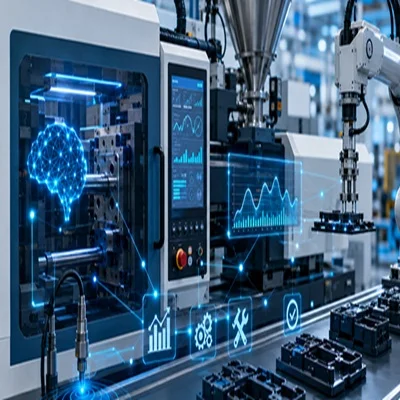
Ask any plant manager what kept them up at night a decade ago, and the answer was almost always the same: unpredictable defects, unplanned downtime, and processes that depended too heavily on one experienced operator's gut feel. That anxiety is fading fast. Sensors now track melt temperature shot by shot, cameras inspect parts the instant they're ejected, and software flags problems before they ever reach a customer. This is the new reality of smart injection molding, where artificial intelligence has moved from buzzword to backbone of the process.
For decades, the injection molding machine was a mechanical workhorse — reliable, but largely reactive. Operators set parameters, ran a batch, and hoped for consistency. Defects were often caught after the fact, downtime was unpredictable, and quality control leaned heavily on manual inspection. That model is quickly becoming outdated. AI injection molding systems now bring predictive intelligence to a process that used to depend almost entirely on operator experience and trial-and-error tuning.
This shift isn't just a nice-to-have upgrade. It's reshaping how manufacturers think about precision, uptime, and quality across the entire production lifecycle.
| Also Read: Energy-Efficient Extrusion and Molding Systems: Reducing Costs While Achieving Sustainability Goals |
What Makes an Injection Molding Machine "Smart"?
At its core, intelligent injection molding combines traditional hydraulic or electric molding equipment with layers of sensors, software, and machine learning models that interpret data as it's generated — not after the fact. Instead of a machine simply executing a fixed program, a smart system continuously observes variables like melt temperature, injection pressure, cooling time, and cavity fill rate, then adjusts in real time to keep every shot consistent.
Think of it like the difference between a car with cruise control and one with adaptive cruise control. The first holds a set speed no matter what's happening around it. The second reads the road, anticipates changes, and adjusts on its own. That's essentially what separates a conventional machine from a smart one — the ability to sense, learn, and respond without waiting for a human to intervene.
This intelligence doesn't replace skilled operators; it supports them. Technicians still set the strategic direction, but the machine now handles the fine-tuning that used to eat up hours of trial runs.
Automated Injection Molding: Less Guesswork, More Consistency
One of the biggest wins from injection molding automation is the reduction of human error in repetitive, high-precision tasks. Manual adjustments — even by experienced operators — carry natural variation. A slight difference in how someone reads a gauge or times a cycle can ripple into inconsistent parts.
Automated systems remove much of that variability. They apply the same precise parameters shot after shot, and when conditions drift (say, ambient temperature changes affecting material viscosity), the system compensates automatically rather than waiting for someone to notice a problem on the shop floor.
This is where smart manufacturing systems really start to shine. Injection molding doesn't operate in isolation anymore — it's connected to broader production ecosystems where data flows between machines, quality stations, and enterprise software. A smart injection molding cell can talk to upstream material handling systems and downstream packaging lines, creating a more synchronized, less siloed factory.
Predictive Maintenance: Fixing Problems Before They Happen
Unplanned downtime is one of the costliest problems in plastics manufacturing. A single unexpected breakdown can halt production for hours, delay shipments, and rack up repair costs that dwarf the price of routine servicing.
Predictive maintenance for injection molding tackles this head-on. By continuously monitoring vibration patterns, motor load, hydraulic pressure, and temperature fluctuations, AI models can detect the subtle signs that precede a mechanical failure — often weeks before a human technician would notice anything unusual. Instead of following a rigid maintenance calendar (which either wastes money on unnecessary servicing or misses problems between scheduled checks), manufacturers can service components exactly when the data suggests it's needed.
The result is fewer surprise breakdowns, longer equipment lifespan, and maintenance budgets that go further because resources are spent where they actually matter.
Real-Time Process Monitoring: Seeing the Invisible
Injection molding involves dozens of interacting variables — melt flow, pressure curves, cooling rates, mold temperature — many of which change within fractions of a second during a single cycle. Traditionally, much of this happened out of sight, and problems only became visible once a part was already defective.
Real-time process monitoring changes that dynamic entirely. Sensors capture data at every stage of the shot, and AI algorithms analyze it instantly, flagging deviations as they happen rather than after a batch is complete. If pressure spikes unexpectedly or fill time drifts outside tolerance, the system can alert operators or even self-correct before the next cycle begins.
This visibility is a game-changer for plastic injection process optimization. Engineers no longer have to rely on periodic sampling or end-of-run reports to understand how a process is performing. They get a continuous, granular view that makes fine-tuning faster and far more accurate — shrinking the gap between "good enough" and truly optimized production.
Intelligent Quality Inspection: Catching What the Human Eye Misses
Quality control has traditionally been one of the more labor-intensive parts of injection molding. Inspectors examine parts for flash, sink marks, short shots, warping, and dozens of other defects — often visually, often under time pressure, and often at high volumes where fatigue naturally creeps in.
Intelligent quality inspection powered by AI addresses this by combining machine vision inspection with deep learning models trained to recognize defect patterns far more consistently — and often more precisely — than the human eye. High-resolution cameras capture images of every part as it's produced, and AI compares them against thousands of reference examples in milliseconds, flagging anomalies that might be invisible at normal inspection speeds.
What makes this especially powerful is that these systems keep learning. As more parts are inspected, the model refines its understanding of what counts as an acceptable variation versus a genuine defect, reducing both false rejects and missed defects over time. That kind of continuous improvement simply isn't possible with manual inspection alone.
Moving Toward Zero-Defect Manufacturing
All of these pieces — automation, predictive maintenance, real-time monitoring, and machine vision — feed into a larger ambition in modern manufacturing: zero-defect manufacturing. The idea isn't that defects will never happen, but that they'll be caught, understood, and prevented so early in the process that they rarely reach the end of the line.
AI plays a central role here because it connects data across the entire production chain. A defect detected by a vision system isn't just flagged and discarded — it's traced back to the process conditions that caused it, whether that's a pressure fluctuation, a mold temperature drift, or material inconsistency. Over time, this feedback loop allows manufacturers to tighten their processes so precisely that defect rates drop dramatically, not just at inspection, but at the source.
For industries like medical devices, automotive components, and electronics — where even minor defects can have serious consequences — this shift toward near-zero defect rates isn't just a productivity win. It's a competitive necessity.
The Smart Factory Vision
Zoom out, and it becomes clear that AI-powered injection molding is really one piece of a much bigger picture: the smart factory injection molding ecosystem. In this model, individual machines aren't just smart in isolation — they're part of a connected network where data from molding, quality inspection, material handling, and logistics all feed into a central intelligence layer.
AI-based production monitoring ties this together at the facility level. Plant managers get dashboards that show not just how one machine is performing, but how the entire line is trending — throughput, scrap rates, energy consumption, and maintenance needs, all in one view. This level of transparency makes it possible to spot bottlenecks before they cause delays and to make data-driven decisions instead of relying on gut instinct or delayed reports.
It also means that lessons learned on one machine can be applied across an entire fleet. If an AI model discovers an optimized parameter set for a particular resin, that knowledge doesn't stay locked in one machine's memory — it can inform settings across the whole facility, or even across multiple plants within the same company.
Why This Matters Now
The plastics manufacturing industry is under pressure from multiple directions: rising material costs, tighter quality expectations, skilled labor shortages, and increasing demand for faster turnaround times. Manufacturers who continue relying on purely manual, reactive processes are going to struggle to keep pace with competitors who've adopted AI-driven systems.
The good news is that this transformation doesn't require ripping out existing equipment and starting from scratch. Many smart capabilities — from predictive maintenance sensors to machine vision inspection stations — can be layered onto existing injection molding machines, making the transition more accessible than it might first appear.
Frequently Asked Questions
What is smart injection molding?
Smart injection molding refers to injection molding machines equipped with AI, sensors, and real-time data analytics that automatically monitor and adjust process parameters to improve consistency, reduce defects, and minimize downtime.
How does AI improve injection molding quality control?
AI improves quality control through machine vision inspection systems that analyze every part in real time, catching defects like flash, warping, or short shots far more consistently than manual visual inspection, while continuously learning to improve accuracy.
What is predictive maintenance in injection molding?
Predictive maintenance uses sensor data and AI algorithms to detect early warning signs of equipment wear or failure, allowing manufacturers to service machines exactly when needed rather than on a fixed schedule, reducing unplanned downtime.
Can AI achieve zero-defect manufacturing in plastics production?
While zero defects in an absolute sense is an aspirational goal, AI-driven process optimization, real-time monitoring, and intelligent inspection can dramatically reduce defect rates by catching and correcting issues at their source before they affect finished parts.
Final Thoughts
The move toward AI-powered injection molding isn't about replacing the people who run these machines — it's about giving them better tools. Faster insights, fewer surprises, and a level of precision that manual processes simply can't match consistently at scale. As smart manufacturing systems continue to mature, the manufacturers who invest in this intelligence layer today are the ones who'll be setting the pace for quality, efficiency, and reliability in the years ahead.
 Media Pack Download
 Newsletters
 Industrial Events