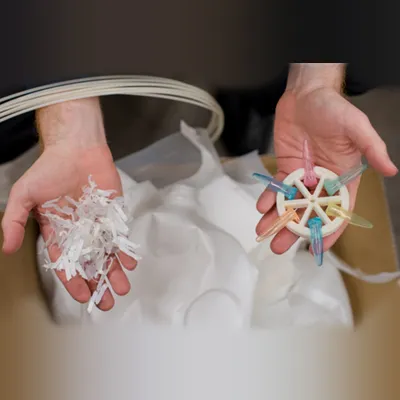
Biodegradable Plastic Films: Markets, Materials & Adoption

The plastics industry stands at a juncture, facing growing scrutiny from regulators, environmentalists, and even consumers. With the fear of waste buildup and micro plastic contamination of the environment, a new type of material is gaining interest, and that is biodegradable packaging film. A new generation of innovative films, produced from renewable materials and designed to degrade at the end of their life, is transforming both the food packaging and agricultural industries.
This article takes us into a world of changing compostable plastic sheets, the materials that are fueling the development of the product, and the dynamics of its worldwide adoption. Sustainable film materials are more of a critical story today as industries are transitioning to greener solutions.
Understanding Biodegradable Plastic Films
Biodegradable packaging films refer to thin layers of substances that are meant to disintegrate under given environmental circumstances. These films break down to carbon dioxide, water, and biomass using the action of microbes, unlike traditional plastics, which last hundreds of years. Their attraction is that they are less environmentally burdensome and still perform just as well as traditional films.
The biodegradable plastics have been broadened with the introduction of bio-based polymer films that are made using renewable feedstock, such as corn, sugarcane, potato starch, and cellulose. Their afterlife destinations, be it an industrial composting, home composting, or soil biodegradation, have become a vital selling point among producers and labels keen on following through on their sustainability promises.
The Materials behind the Market
It is no longer the market that has one solution. Rather, a range of sustainable film materials is creating the new trend:
PLA Film Production
Polylactic acid (or PLA) has become one of the most commercially feasible in terms of biodegradable food wraps and packaging in general. A product made of fermented plant sugars, PLA film manufacturing is transparent, printable, and rigid, making it applicable in packaging, disposable tableware, as well as in shrink-wrapping food. PLA, however, needs industrial composting environments to be able to break down, and this may cast doubt on its actual environmental imprint.
PHA Packaging Solutions
Polyhydroxyalkanoates (PHAs) are an innovation in PHA packaging and are prepared using plant oils and sugars in fermentation by bacteria. PHAs, unlike PLA, can decompose in both the marine and terrestrial ecosystems, and thus, are perfect as single-use products such as bags, straws, and agricultural films. Their versatility makes them a huge force in the shift to renewable packaging films.
Cellulose-Based Films
The cellulose-based film market has acquired its momentum due to the naturalness of its origin and its superior oil and grease resistance as a barrier. These are also clear and easy to dispose of as they are transparent and compostable, as well as commonly used in confectionery wraps and labels. Being a pioneer bioplastics, they have resurfaced in prominence with industries urging the need to get realistic compostable plastic sheets that are practical and biodegradable.
Agricultural Mulch Films
In farming, the use of agricultural mulch films has revolutionized farming because it has enhanced the temperature of soils, retention of moisture, and weed suppression. Mulch films, traditionally produced out of polyethylene, were not easy to dispose of. Nonetheless, biodegradable packaging films produced to be used in the agricultural industry can decompose naturally into soil, saving time and money to the farmer and minimizing the environmental impact.
Market Insights: Growth Drivers and Hurdles
The biodegradable packaging films market in the world is expected to grow tremendously in the next decade. The driving forces are increasing regulations prohibiting single-use plastics, corporate sustainability, and increasing consumer awareness.
A further analysis of the numbers shows the way the industry is changing:
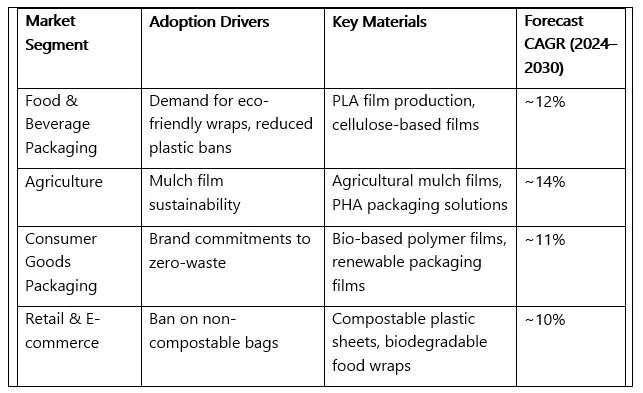
Although these opportunities are there, there are still various challenges. Cost is also an obstacle since sustainable film materials are 2-4 times higher in cost than traditional plastics. There are also infrastructure issues that limit the adoption rate because the industrial composting facilities are not prevalent in the market. Also, the standardization of certifications of biodegradable or compostable is still spotty and confounding to both consumers and regulators.
The Adoption Curve: Who is leading the Charge?
The industries that switch to renewable packaging films are different according to the geographical region and industry. Europe is a leader, and the high standards are enforced by the strict rules like the Single-Use Plastics Directive of the EU. In Germany, France, and the UK, brands have picked up compostable plastic sheets in food packaging and retailing.
Asia-Pacific is also experiencing a high growth rate as a result of increasing consumer demand in China, India, and Japan. India, as an example of this, has triggered startups to create biodegradable food wrappers and agricultural mulch films due to bans on single-use plastics.
The adoption in North America is consistent, especially in niche markets such as organic food and high-quality packaging. Big companies are testing out PHA packaging solutions as a way to future-proof supply chains to meet future regulatory shifts.
Comparing Material Properties: A Technical Perspective
In order to comprehend adoption better, it is essential to assess the performance characteristics of a number of sustainable film materials.
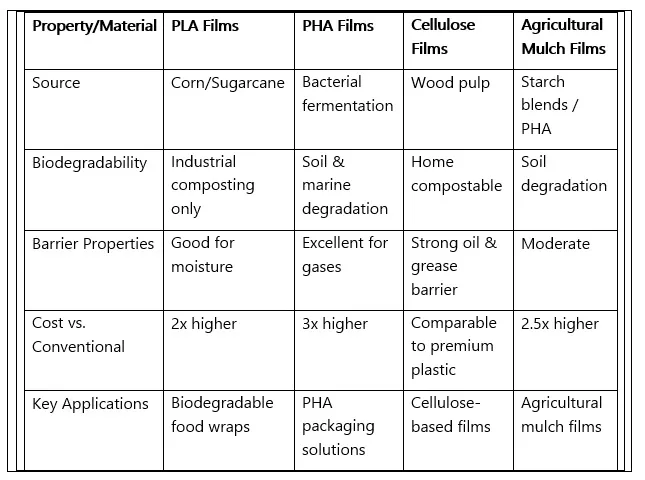
This comparative view shows us that even though no one material is always best, bio-based polymer film innovations are narrowing the performance divide between petroleum-based plastics.
The Role of Innovation and Startups
Startups are increasingly having an important role in the biodegradable packaging films scenario. Entrepreneurs are developing agile business models by testing sustainable film materials made of seaweed, fermentation processes to scale-up PHA packaging solutions as an alternative to petroplastic, and more. Most of them are collaborating with food brands, retail outlets, and farm suppliers to implement pilot projects that hasten adoption.
In the meantime, such established market players as BASF, NatureWorks, and Novamont are spending a lot of money on research and development, aiming to enhance the production of PLA film and increase the capacity to produce it worldwide. Their scale production capability has the potential to offset the price difference between compostable plastic sheets and traditional ones.
The Consumer Angle: Perception and Challenges
The main factor in the success of renewable packaging films is the consumers. There is also the increasing demand for environmentally friendly packaging, which is, however, a matter of confusion. A lot of consumers are unable to differentiate between such terms as biodegradable, compostable, and recyclable. The ecological advantages of biodegradable food wraps are negated by their mismanagement, such as not putting them in a compost pile, but in regular trash.
Creating awareness among the people, together with enhancing the infrastructure for composting and collecting garbage, is critical in harnessing the potential of sustainable film materials. In its absence, the adoption curve will become stagnant even in the presence of technological advancement.
Future Outlook: What Lies Ahead?
The future of biodegradable packaging films is gigantic in the next decade. The use of bio-based polymer films and compostable plastic sheets will increase at a faster rate as policies become more stringent and corporate sustainability objectives become stricter. It can be expected that future studies will be concerned with hybrid solutions, which involve the production of PLA films and the addition of composting-friendly additives that allow home-composting, or the optimization of PHA-based packaging solutions to be cheaper.
Innovative agricultural mulch films in agriculture will also enhance sustainable farming through promoting better soil health and low-cost waste management. On the same note, there will be an influx of biodegradable food wraps and cellulose-based films in the food industry as brands struggle to fulfill the green consumer demands.
Finally, renewable packaging films are not a fad, but it is a need. The movement toward more sustainable film materials, as the world develops a broader understanding of plastic pollution, will change how industries design, manufacture, and handle waste.
Conclusion
The revolution of the packaging business depends on the materials that are sustainable and offer performance. Biodegradable packaging films are a vital new direction, as they can provide new solutions in food, retail, agriculture, etc. PLA film production, PHA packaging solutions, cellulose-based films, and agricultural mulch films represent only a few of the many varieties of available materials, so that no industry is spared.
There have been obstacles, especially in cost, infrastructure, and consumer education, but the case of compostable plastic sheets and renewable packaging films has a wave that cannot be disregarded. With the coming together of governments, corporations, and consumers around the necessity of change, a sustainable film material will be at the center of a more responsible and greener future.
 Media Pack Download
 Newsletters
 Industrial Events