


28 October 2026 - 29 October 2026
Messe Bremen,Germany



Latest on Plastics Industry

Advanced Engineering Plastic Stock Shapes: High-Performance Materials for Precision Industrial Components
Metal announces its failures. A shaft snaps, a bearing seizes, and the cause is usually obvious. Plastic is more forgiving, and that is exactly the problem: a poorly chosen grade can run for weeks before it creeps, swells or wears itself out of tolerance. The uncomfortable truth in most plant maintenance logs is that these parts rarely fail because

Designing Plastics for Recycling: Material Innovation, Eco-Design and EPR
Design for recycling plastics means choosing materials, colors, labels, inks, closures and structures that sorting and recycling systems can handle, so the package is actually recycled, not just labelled "recyclable." The core rules are to use a single polymer where possible, avoid contaminants, make components separable, and match the design to local collection and sorting infrastructure

AI and Smart Sorting Technologies: Revolutionizing Plastic Waste Recycling Efficiency
Every year, the world produces hundreds of millions of tons of plastic waste, yet only about 9% of it actually gets recycled. The problem isn't that people don't care. It's that recycling plants can't reliably tell one plastic from another, and a single wrong bottle in the wrong batch can turn a valuable bale into worthless junk.

Advanced Plastic Recycling Technologies: Mechanical vs. Chemical Recycling for a Circular Economy
Mechanical recycling physically shreds, washes, and melts plastic into new pellets without changing its chemistry. It is cheaper and has a lower carbon footprint, but it works best on clean, single-type plastics.

High-Precision Plastic Injection Molding for EVs, Medical Devices and Consumer Electronics
Precision injection molding is a manufacturing process that produces plastic components to extremely tight tolerances - often within a few microns - using specialized tooling, controlled machine parameters, and rigorous quality inspection. Unlike standard injection molding, where a small dimensional variance might not matter, high precision plastic molding is built for industries where a 0.01mm error can mean a part....

Innova Engineered Plastics, a manufacturer of heavy-gauge plastic enclosures and single-use components for medical devices and other highly regulated...

RCS Group is investing €75 million in a new plastics recycling facility in Werne, Germany, to expand its recycling operations and support the developm...

Covestro has announced a strategic MDI investment programme to strengthen its global position and improve long-term supply security for customers worl...

Gould Industries Ltd., a Montreal-based manufacturer of recycled plastic products, has acquired a manufacturing plant in Summit, Mississippi. The acqu...

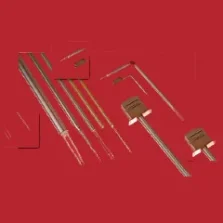
Aluminium Compact Band Heater Type ZAK
The next generation of innovative heating bands for machines and tools in the plastics processing industry and other devices with homogeneous heat requirements. Sheath material: aluminium Wall thickness: approx. 11mm or 14mm Max. Operating temperature: 450?C Max. Power density: 4,5 W/cm2

The circular economy isn't just an option - it's essential for our survival. As we face mounting plastic pollution, we must shift from a take-make-dispose model to one where materials are reused and kept in circulation. It's not only about reducing waste but also about securing our future.

?Our technology isn't just about reducing plastic pollution; it's about redefining sustainability, ensuring that every product we make leaves a positive impact on the planet."

Chief Executive Officer
Messe Muenchen India Pvt. Ltd.

Chief Marketing Officer
Moretto S.p.A.

Export Manager
Plastmore
Testimonials

I am very satisfied with the service of Plastics Technology.com. I appreciate their service and assistance which is very professional.
Abderahmane Ouhbi - Director
Ihne & Tesch GmbH
See your banner here...